


Solar Integration: Powering Multi-Day Remote Lighting Kits
For multi-day remote productions, solar power is a viable secondary charging source. This article provides a workflow for integrating portable solar panels with lighting kits to maintain a continuous production cycle away from the grid.
When we operate in environments where the nearest wall outlet is a three-day hike away, power isn't just a convenience—it is the lifeblood of the production. On our repair benches and in our customer support logs, we frequently see the same pattern: creators underestimate the "thermal and atmospheric taxes" of remote locations. A battery that lasts four hours in a studio might only give you two in the high-altitude cold.
In this guide, we will treat power as a system. We will move beyond the marketing "wattage" and look at the engineering reality of solar harvesting, battery lifecycle management, and the mechanical stability required to keep your gear safe in the wild.
1. The Realities of Solar Harvesting: The 60% Rule
The most common mistake we observe in field reports is treating a solar panel's "rated output" as a guaranteed constant. A 100W panel rarely outputs 100W for more than a few peak hours. In practice, experienced creators plan for a 60-70% derating on the panel's stated capacity.
The Thermal and Angular Tax
Solar efficiency is dictated by the angle of incidence and the temperature of the cells. Ironically, while solar panels need sun, excessive heat reduces their efficiency. Conversely, in high-altitude environments, the thinner atmosphere allows for higher UV penetration but the extreme cold can affect the chemical activity of the batteries you are trying to charge.
According to the IEC 62133-2:2017 Safety Requirements for Lithium Cells, lithium-ion batteries have specific temperature windows for safe charging. Charging a frozen battery can lead to "lithium plating," a permanent degradation of the cell.
Heuristic: The "20/80" Solar Strategy
- Never drain below 20%: We recommend never letting your Li-ion batteries drop below a 20% state-of-charge when relying on solar. A deeply discharged battery may not have the internal "logic power" to initiate a charge from a weak or fluctuating solar input, effectively stranding your gear.
- Charge to 80%: For maximum cycle life, aim to stop charging at 80% during the day. This leaves a buffer for the battery to stabilize and reduces heat stress.
2. Modeling the Expedition Workflow: A Case Study
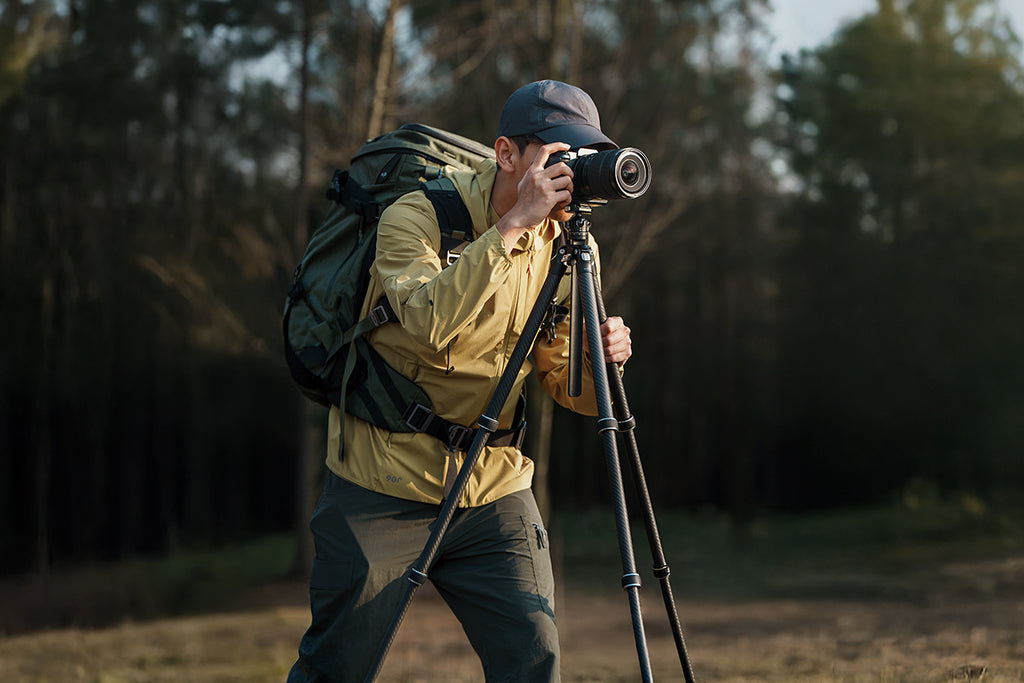
To understand the practical constraints of remote lighting, we modeled a scenario based on a "High-Altitude Expedition Creator"—a solo filmmaker operating at 4,000m for a 7-day shoot.
Scenario Modeling: The High-Altitude Expedition Creator
In this model, we analyzed the power draw of a standard portable LED (like a VL120) against the harvest potential of a 100W portable solar panel.
Modeling Note (Reproducible Parameters): This is a scenario model, not a controlled lab study. It assumes clear skies for 5 peak sun hours and standard atmospheric density adjustments for 4,000m altitude.
Parameter Value Unit Rationale / Source Light Model VL120 - Standard prosumer portable LED Brightness Setting 70% % Balanced output for documentary work Power Bank Capacity 5000 mAh Typical mobile creator power reserve Solar Effective Output 65 W Rated 100W with 65% field derating Battery Health Factor 0.9 - Accounts for 1-2 years of field use
Quantitative Insights: Our modeling shows that a VL120 light at 70% brightness draws approximately ~5.6W. While a 5000mAh power bank (18.5Wh) theoretically offers several hours of light, after accounting for 85% converter efficiency and battery health, the actual runtime is ~2.5 hours.
For the expedition creator, this reveals a critical dependency: Solar charging must occur during daylight production hours. You cannot rely on "overnight" charging. Your morning and evening "golden hour" shoots must be powered by batteries that were actively harvested during the midday sun.
3. Mechanical Infrastructure: Stability and "Wrist Torque"
Power is useless if the wind knocks your rig over. When mounting solar panels or large lighting arrays in remote areas, we must look at the mechanical interfaces.
The Biomechanics of the Rig: Torque Analysis
Weight isn't the only enemy; leverage is. When you add accessories like external batteries or monitors to your camera, you increase the "Lever Arm" ($L$).
We use a simple calculation to understand the strain on both the equipment and the creator: Torque ($\tau$) = Mass ($m$) $\times$ Gravity ($g$) $\times$ Lever Arm ($L$)
For example, a 2.8kg rig (camera + cage + battery) held 0.35m away from the wrist generates approximately $9.61 N\cdot m$ of torque. This represents 60-80% of the Maximum Voluntary Contraction (MVC) for an average adult. By using modular quick-release systems like the FALCAM F22, you can move heavy accessories closer to the center of gravity, significantly reducing this leverage and extending your handheld shooting endurance.
Wind Stability and Tipping Points
A 100W solar panel has a significant frontal area (~0.15m²). In a "Fresh Breeze" (8 m/s or 29 km/h), the overturning moment is substantial.
Stability Modeling Results:
- Critical Tipping Wind Speed: ~10.9 m/s (39 km/h).
- Safety Factor at 8 m/s: 1.36 (Acceptable).
- Required Ballast for 15 m/s Gale: An additional 3.9kg of weight on the tripod base.
We recommend using a tripod that adheres to the ISO 1222:2010 Photography — Tripod Connections standard for secondary gear, but for the primary camera, a quick-release system is essential for rapid deployment and stowage during sudden weather shifts.
A Note on Quick-Release Materials
There is a common misconception that all premium quick-release plates are carbon fiber. In reality, systems like the FALCAM F38 and F50 are precision-machined from Aluminum Alloy (6061 or 7075).
- Why Aluminum? It provides the necessary rigidity and machining tolerances (Zero-Play) required for secure mounting. Carbon fiber is excellent for tripod legs due to its vibration-damping properties, but for the plate itself, aluminum is the standard for structural integrity.
- The Thermal Bridge: Be aware that aluminum plates act as a thermal bridge. In extreme cold, they conduct heat away from the camera base. We suggest attaching your plates indoors before heading out to minimize "metal-to-skin" shock and battery cooling.
4. Workflow ROI: The Value of Speed
In a remote production, time is your most limited resource. Every minute spent fiddling with a thumb screw is a minute of lost light.
The ROI Calculation:
- Traditional Thread Mounting: ~40 seconds per swap.
- Quick Release (F38/F22): ~3 seconds per swap.
- Annual Impact: For a professional performing 60 swaps per shoot across 80 shoots a year, this saves approximately 49 hours annually.
At a professional rate of $120/hr, this equates to over $5,900 in recovered value. This structural efficiency is what we call "Creator Infrastructure." As noted in The 2026 Creator Infrastructure Report, the shift toward "ready-to-shoot" toolchains is what separates professional workflows from hobbyist setups.
5. Safety, Logistics, and Compliance
When integrating solar and batteries, you are essentially managing a portable power station. This carries logistical responsibilities.
Battery Chemistry: Li-ion vs. LiFePO4
While standard Lithium-ion (Li-ion) is lightweight and common in pocket lights, it typically degrades to 80% capacity in 500-1000 cycles. For long-term sustainability in harsh environments, Lithium Iron Phosphate (LiFePO4) is superior, offering 6000+ cycles. However, because LiFePO4 is heavier, it is often reserved for larger "solar generator" base stations rather than on-camera lights.
Aviation and Transport
If your remote production involves air travel, you must comply with the IATA Lithium Battery Guidance.
- Watt-Hour Limits: Most airlines allow batteries up to 100Wh without prior approval.
- Terminal Protection: Always cover the pins of your batteries or keep them in individual cases to prevent short circuits.
Photobiological Safety
For long-duration shoots where lights are close to subjects, eye safety is paramount. High-quality LEDs should align with IEC 62471:2006 Photobiological Safety to ensure that blue-light hazards and infrared radiation are within safe limits for human exposure.
6. Pre-Shoot Safety Checklist
Before heading into a multi-day remote shoot, we recommend this tactile and visual "Infrastructure Check":
- Audible: Listen for the "Click" when engaging any quick-release mount.
- Tactile: Perform the "Tug Test." Pull firmly on the camera or light after mounting to ensure the locking pin is fully seated.
- Visual: Check the locking indicator (often an orange or silver pin) on your FALCAM mounts.
- Cable Management: Ensure heavy HDMI or power cables are secured with cable clamps. A swinging cable can create unwanted torque that may eventually loosen a mounting plate.
- Parallel vs. Series: If connecting multiple solar panels, parallel connections are generally safer and more fault-tolerant for 12V systems. Shading on one panel in a series circuit can significantly drop the output of the entire array.

Summary: Building a Resilient System
Remote production is a test of preparation. By understanding the 60% rule of solar harvesting, managing your battery state-of-charge between 20% and 80%, and utilizing a rigid, quick-release infrastructure, you mitigate the risks of the wild.
The goal of the Ulanzi ecosystem—from FALCAM rigging to high-CRI lighting—is to provide the "stable core" that allows you to focus on the creative "fast iteration" of your story. When your infrastructure is invisible, your art becomes the focus.
YMYL Disclaimer: This article is for informational purposes only. Remote expeditions involve inherent risks. Always consult with professional guides and electrical engineers when designing high-capacity power systems for extreme environments. Battery safety and aviation regulations change frequently; always verify with your carrier and local authorities before travel.


