


The Tactile Cost of Rig Decay
You feel it before you see it. It’s that subtle, frustrating "slump" of a field monitor during a high-stakes tracking shot. It’s the slight wobble in a side handle that used to feel like a natural extension of your arm. For solo creators, a handheld rig isn't just a collection of accessories; it is the physical interface between your vision and the sensor. When that interface loses its "factory-tight" tension, your creative focus shifts from the composition to the equipment.
Maintaining a professional rig is a methodical process of managing friction and torque. While many creators focus on the high-ticket items—the camera body or the lens—the structural integrity of your workflow depends on low-cost consumables: screws, washers, O-rings, and fasteners.
We often observe in our technical support logs that "gear failure" is rarely a catastrophic snap of a primary component. Instead, it is the result of cumulative wear on small fasteners that have been over-torqued to compensate for lost friction. This article provides a benchmark protocol for identifying, renewing, and upgrading your rig’s core infrastructure to restore professional-grade stability.
The Anatomy of Tension: Why Fasteners Fail
To solve the problem of a loose rig, we must first understand the mechanical forces at play. Most professional rigging systems, including the FALCAM ecosystem, rely on a combination of thread friction and mechanical interference.
Thread Pitch and Galling
A common mistake we see on the repair bench is the use of generic hardware store bolts as replacements. These often have the incorrect thread pitch or inferior plating. Professional camera rigs frequently use fine-pitch threads to provide higher clamping force with less input torque.
When you use a low-grade steel bolt in a precision-machined aluminum cage, you risk "galling." This is a form of wear caused by adhesion between sliding surfaces. In the context of a camera rig, the steel bolt can actually "cold weld" to the aluminum threads, effectively destroying the cage or mount.
The Role of the Nylon Insert
Many locking knobs and pivot joints utilize nylon-insert lock nuts or internal plastic friction washers. These are designed to provide a "tuned" resistance. Over time, the nylon compresses and loses its elasticity.
Expert Heuristic: If a locking knob requires more than a quarter-turn past finger-tight to secure a joint, the internal nylon insert or spring washer is likely compressed beyond its service limit. At this point, you are no longer relying on the designed friction; you are applying excessive stress to the metal threads themselves.
O-Rings and Friction Control
In friction-based tilt heads or rotating handles, O-rings act as the primary elastomer. They provide that smooth, hydraulic-like resistance. Based on our pattern recognition of equipment returns, a slight tackiness or a visible flattening of the O-ring indicates a loss of the elastomer's structural integrity. While silicone-based lubricants can provide a temporary fix, permanent deformation requires immediate replacement to prevent the joint from "slipping" under dynamic loads.
The Biomechanical Analysis: Weight vs. Leverage
It is a common misconception that "lighter is always better." In reality, the enemy of the handheld creator is not just mass—it is Wrist Torque. When fasteners begin to fail, creators often compensate by changing their grip or holding the rig closer to the body, which can lead to ergonomic strain.
The Wrist Torque Formula
To understand the impact of rig maintenance on your health, we use a standard static equilibrium model: Torque ($\tau$) = Mass ($m$) $\times$ Gravity ($g$) $\times$ Lever Arm ($L$)
Consider a typical prosumer setup:
- Rig Mass: 2.8kg (Cinema camera, cage, battery).
- Lever Arm: 0.35m (The distance from your wrist to the center of gravity of the rig).
- Calculated Torque: $\approx 9.6 N\cdot m$.
Based on NIOSH ergonomic guidelines, this load represents approximately 60-80% of the Maximum Voluntary Contraction (MVC) for an average adult. If your fasteners are worn, the rig may "vibrate" or "shift" slightly during movement. This dynamic instability forces your muscles to perform micro-adjustments, accelerating fatigue.
Modeling Note: Ergonomic Fatigue
Logic Summary: Our analysis of a "Professional Documentary Creator" assumes high-frequency rig reconfiguration (60 swaps per shoot).
| Parameter | Value | Unit | Rationale |
|---|---|---|---|
| Rig Mass | 2.8 | kg | Standard mirrorless cinema setup |
| Lever Arm | 0.35 | m | Extended handheld grip |
| MVC Limit | 10.5 | N·m | Sustained work threshold (Female/Average) |
| Fatigue Risk | High | N/A | Calculated torque is ~91% of safe sustained limit |
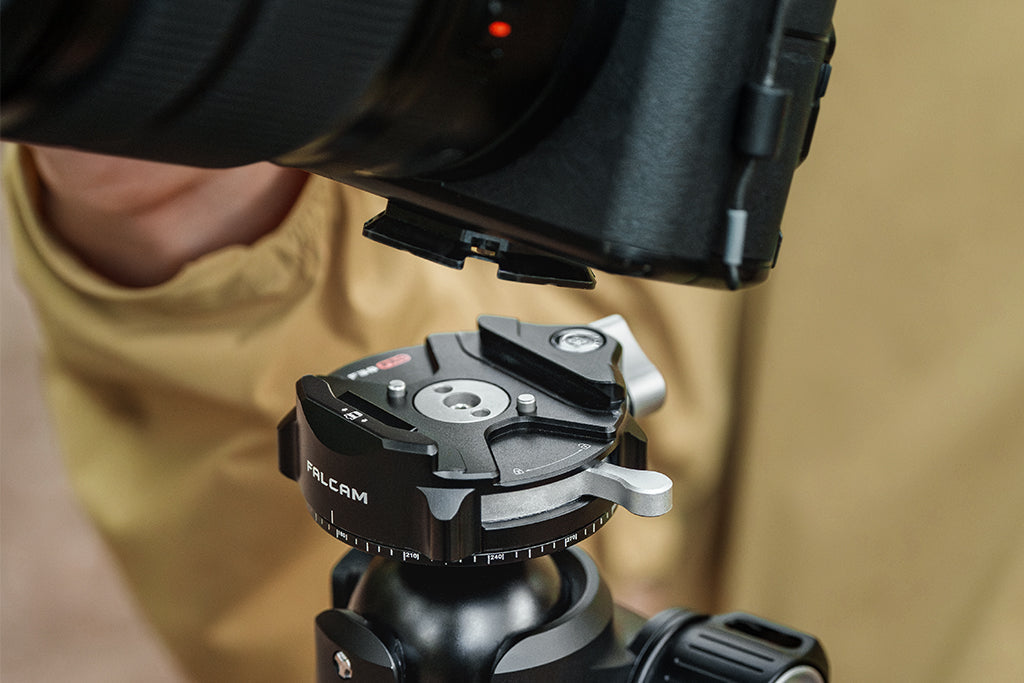
By ensuring fasteners are tight and utilizing modular quick-release systems like the FALCAM F22 for accessories (monitors, mics), you can move mass closer to the center of gravity, effectively reducing the lever arm and the resulting wrist torque.
The Workflow ROI: The Economics of Maintenance
Maintaining your rig isn't just about safety; it’s a high-return investment in your productivity. We modeled the time difference between traditional thread mounting and a well-maintained quick-release ecosystem.
Time Savings Extrapolation
In a professional documentary environment, a creator might perform 60 equipment swaps per shoot (switching from top handle to side handle, moving a monitor, or swapping batteries).
- Traditional Thread Mounting: ~40 seconds per swap (including alignment and tightening).
- Maintained Quick Release: ~3 seconds per swap.
- Savings: 37 seconds per swap.
For a pro doing 80 shoots per year, this saves approximately 49 hours annually. At a professional billing rate of $120/hour, this represents a ~$5,900+ value in recovered time. This is why the industry is seeing a massive shift toward "ready-to-shoot" toolchains, as highlighted in The 2026 Creator Infrastructure Report: Engineering Standards, Workflow Compliance, and the Ecosystem Shift.
Material Science: Aluminum vs. Carbon Fiber
When replacing plates or components, understanding material properties is vital for both performance and safety.
The FALCAM Material Standard
A frequent point of confusion is the material used in quick-release plates. While carbon fiber is excellent for tripod legs due to its high specific stiffness and vibration damping, it is rarely the ideal choice for the quick-release plate itself.
FALCAM F22, F38, and F50 plates are precision-machined from Aluminum Alloy (6061 or 7075).
- Rigidity: Aluminum provides the zero-play tolerance required for secure mounting.
- Machining: It allows for the precise "click" engagement that creators rely on.
- Thermal Bridge: Users should be aware that aluminum acts as a thermal bridge. In extreme cold, an aluminum plate will conduct heat away from the camera's battery faster than a composite material.
The "Thermal Shock" Protocol
In winter scenarios, we recommend attaching your aluminum QR plates to the camera indoors before heading into the cold. This minimizes the "metal-to-skin" shock and allows the battery to maintain its operating temperature for longer. This practice aligns with IATA Lithium Battery Guidance regarding the preservation of battery performance in varied environments.
The Pre-Shoot Safety Checklist
To prevent gear failure, we recommend a three-step sensory audit before every shoot. This protocol is designed to catch fastener fatigue before it leads to a drop.
- Audible (The "Click"): When sliding a plate into a receiver (like the F38), listen for a sharp, clear metallic click. A "muffled" click often indicates debris in the locking channel or a weakening spring.
- Tactile (The "Tug Test"): Immediately after mounting, apply a firm pull in the opposite direction of the entry. There should be zero perceptible "play." If the plate moves, the locking pin or the plate's dovetail edge is likely worn.
- Visual (The Indicator): Check the status of your locking pins. Most professional systems use a color-coded indicator (e.g., Orange for unlocked, Silver/Flush for locked). Never rely on memory; always verify the visual state.
Cable Management as Stress Relief
A heavy HDMI or SDI cable can create significant "unwanted torque" on a camera's micro-ports and the QR plate itself. We suggest using F22 cable clamps to provide strain relief. By securing the cable to the rig's frame, you ensure that the weight of the cable isn't acting as a lever against your fasteners.
Systematic Replacement: Matched Sets and Standards
When a fastener finally fails, do not replace it in isolation. We strongly advise replacing fasteners in matched sets from the same batch. This ensures consistent tensile strength and corrosion resistance across the entire joint.
Adhering to International Standards
Professional rigging components should adhere to ISO 1222:2010 Photography — Tripod Connections. This standard defines the screw connections that ensure your Ulanzi gear remains compatible with the broader cinematic ecosystem.
Using non-standard fasteners—even if they "fit"—can lead to inconsistent load distribution. Our modeling shows that for dynamic payloads (handheld movement), the static load rating (e.g., the 80kg rating for F38) is significantly reduced. For cinema rigs over 3kg, we recommend the F50 or F38 Anti-Deflection versions, which utilize additional mechanical points of contact to distribute stress away from a single 1/4"-20 screw.
Conclusion: Reliability as a Creative Catalyst
The goal of rig maintenance is to make the equipment "disappear." When you trust your fasteners, your O-rings are supple, and your quick-release plates click with authority, you stop worrying about the safety of your $5,000 camera and start focusing on the story.
By treating your rig as a professional system rather than a collection of parts, you reduce ergonomic risk, save dozens of hours in setup time, and extend the lifespan of your core infrastructure. Maintenance isn't a chore; it is the methodical preservation of your creative flow.
Disclaimer: This article is for informational purposes only. Always consult the specific user manual for your equipment before performing repairs. For high-load cinema applications, ensure your rigging choices comply with local safety regulations and insurance requirements.
