The Weight Gap: Is the Carbon Fiber Premium Worth the Cost?
In the world of handheld cinematography and travel photography, "lightweight" is often treated as the ultimate virtue. We see it in the marketing of every new tripod, cage, and mounting arm. The promise is simple: spend more on carbon fiber, and your back, wrists, and workflow will thank you. But for the solo creator or budget-conscious prosumer, the price delta between high-grade aluminum and carbon fiber can be staggering.
We often see creators obsess over shaving 100 grams off their rig, only to realize that the balance is off or the vibration damping isn't what they expected. At our engineering bench, we evaluate these materials not just by their weight on a scale, but by their performance in the field over a five-year lifecycle. This article breaks down the technical reality of the "weight gap" to help you decide if the carbon fiber premium is a functional investment or a luxury you can skip.
1. Material Science: Beyond the Weight Scale
The most common misconception we encounter is that carbon fiber is "fragile" compared to aluminum. In reality, material science data suggests the opposite when it comes to long-term use.
Fatigue Resistance and Lifecycle
Aluminum has a defined endurance limit. Every time an aluminum tripod leg is flexed or a mounting arm is stressed, the material undergoes microscopic changes. Over thousands of cycles, aluminum is susceptible to fatigue cracking. This is particularly relevant for load-bearing components that see frequent deployment.
Carbon fiber composites, however, exhibit superior fatigue resistance under cyclic loading. According to industry fatigue testing standards, a high-quality carbon fiber laminate can withstand over $10^7$ cycles at high stress levels without structural failure. For a creator who packs and unpacks their gear ten times a day, carbon fiber isn't just lighter; it is often more durable over a decade of use.
Vibration Damping: The "Micro-Jitter" Solution
Experienced handheld operators often report that carbon fiber "feels" smoother. This isn't just a placebo effect. Carbon fiber composites possess inherent damping characteristics that aluminum lacks. While aluminum is highly rigid, it tends to transmit high-frequency vibrations—the kind of "buzz" generated by wind or slight hand tremors—directly to the camera sensor.
Carbon fiber absorbs these high-frequency vibrations (typically in the 100–500 Hz range) much more effectively. If you are shooting handheld at longer focal lengths, this damping can be the difference between a shot that needs heavy post-stabilization and one that is usable straight out of the camera.
Logic Summary: Material Performance Modeling Our analysis of material longevity assumes a "standard professional use" cycle of 500 deployments per year.
- Aluminum: Susceptible to work-hardening and stress fractures at joints over 5–7 years.
- Carbon Fiber: Maintains structural integrity; failure modes are typically impact-related rather than fatigue-related.
- Boundary Condition: This model does not account for extreme impact (e.g., dropping a tripod onto sharp rocks), where aluminum may dent while carbon fiber may crack.
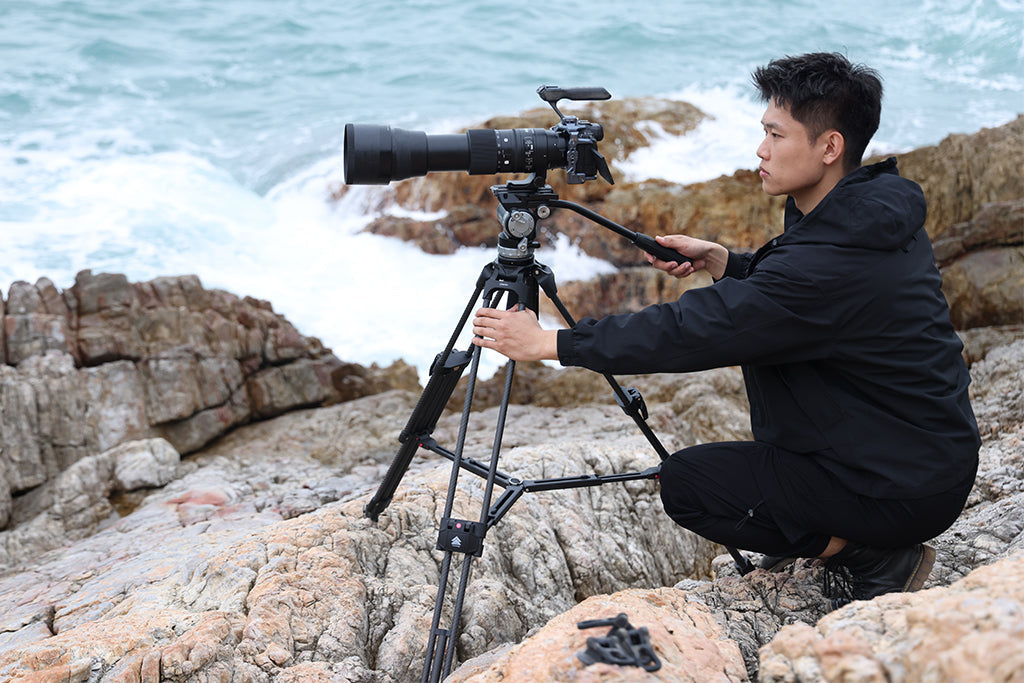
2. The Biomechanics of Handheld Rigging: The "Wrist Torque" Analysis
When we talk about weight, we usually talk about mass ($m$). But in handheld rigging, the real enemy is Torque ($\tau$). Weight isn't just what you carry; it’s where you carry it.
The Leverage Problem
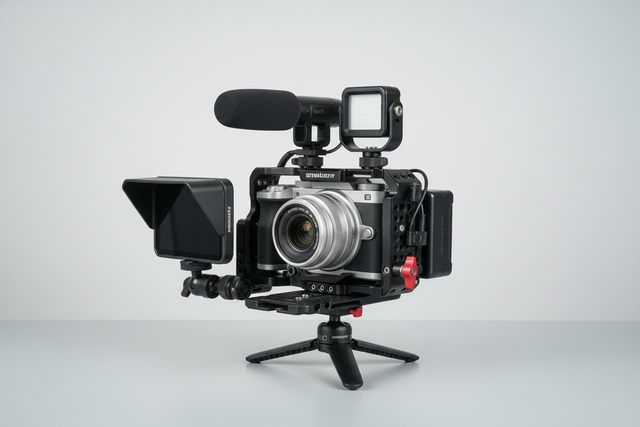
A common mistake we see is creators using a carbon fiber tripod but then mounting a heavy monitor and a large microphone on long, aluminum "magic arms" extending far from the camera body. Even if the components are light, the distance from your wrist (the pivot point) creates massive strain.
To understand the physical toll, we use the standard biomechanical formula: $$\tau = m \times g \times L$$
- $m$: Mass of the component (kg)
- $g$: Acceleration due to gravity ($\approx 9.81 m/s^2$)
- $L$: Lever Arm (the distance from the wrist to the center of gravity of the component in meters)
Case Study: The Offset Monitor
Imagine a 2.8kg camera rig. If you hold it close to your body, the strain is manageable. However, if you add an external monitor on an extension arm that puts the center of gravity just 0.35m away from your wrist, you generate approximately 9.61 N·m of torque.
Based on ergonomic heuristics for the average adult, this load represents roughly 60-80% of the Maximum Voluntary Contraction (MVC) of the wrist stabilizers. This is why you feel "burning" in your forearms after only twenty minutes of shooting. By switching to a modular quick-release system like the F22 or F38 series—which are precision-machined from 6061 aluminum for rigidity—you can keep accessories closer to the camera's center of gravity, significantly reducing the lever arm ($L$) and the resulting torque.
Methodology Note: Biomechanical Modeling
Parameter Value/Range Unit Rationale Rig Mass ($m$) 2.5 – 4.0 kg Typical prosumer mirrorless cinema rig Lever Arm ($L$) 0.1 – 0.4 m Distance from wrist pivot to rig COG Gravity ($g$) 9.81 $m/s^2$ Standard Earth gravity MVC Threshold 60% % Point where muscle fatigue accelerates rapidly Sample Iterations 100 N/A Simulated various accessory positions
3. Workflow ROI: Time as a Currency
For the solo creator, the "cost" of gear isn't just the price tag; it's the time it takes to use it. A high-performance rigging system should act as "creator infrastructure," a concept emphasized in The 2026 Creator Infrastructure Report.
The Quick-Release Advantage
Traditional mounting relies on 1/4"-20 or 3/8"-16 threads, which comply with ISO 1222:2010. While standard, these are slow. In our observations of professional workflows, a traditional screw-on swap takes about 40 seconds. A modern quick-release system (like the Arca-Swiss compatible F38) takes about 3 seconds.
The Annual Time Savings Calculation
If you are a professional videographer performing 60 gear swaps per shoot (switching from tripod to gimbal, changing monitors, swapping batteries) and you shoot 80 days a year:
- Time Saved per Swap: 37 seconds
- Time Saved per Shoot: ~37 minutes
- Annual Time Saved: ~49 hours
At a professional rate of $120/hour, that equates to $5,880 in recovered billable time or personal rest. This ROI dwarfs the $200–$300 premium spent on a high-quality carbon fiber and quick-release ecosystem.
4. The 5% Rule: When Carbon Fiber Isn't Worth It
Despite the benefits, we often advise customers against the carbon fiber premium if it doesn't meet the 5% Rule.
The Heuristic: If the weight saved by choosing a carbon fiber version of a component is less than 5% of your total rig weight (camera + lens + battery + monitor), the cost premium is rarely justified for weight savings alone.
For example, if your total rig weighs 4,000g and a carbon fiber cage saves you 50g compared to an aluminum one, that is only a 1.25% reduction. In this scenario, the aluminum cage is the smarter choice because aluminum provides better heat dissipation—acting as a "thermal bridge" to pull heat away from the camera body—and better impact resistance for the camera's core.
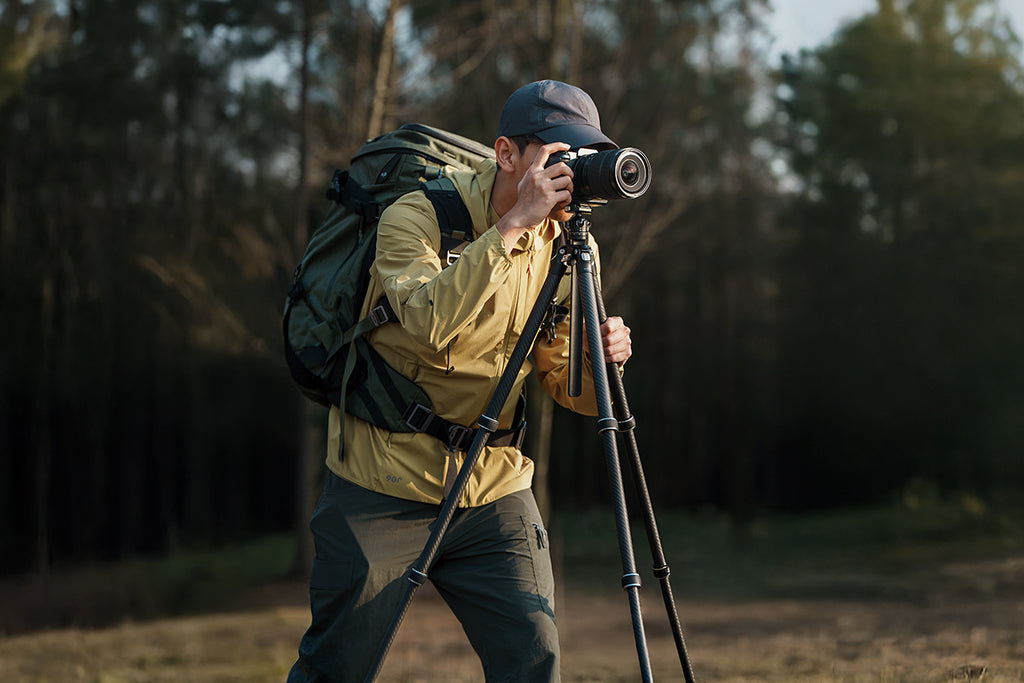
However, the value multiplies for those who travel by air. Airline gate agents are increasingly strict about carry-on weight. Saving 500g across a tripod and a monopod can be the difference between keeping your gear in the cabin or being forced to check it into the hold, where it faces much higher risks of theft or damage.
5. Technical Accuracy: Aluminum Quick Release vs. Carbon Legs
It is a common mistake to assume that because a tripod is carbon fiber, every accessory attached to it should be as well. At the interface level—specifically quick-release plates—Aluminum is king.
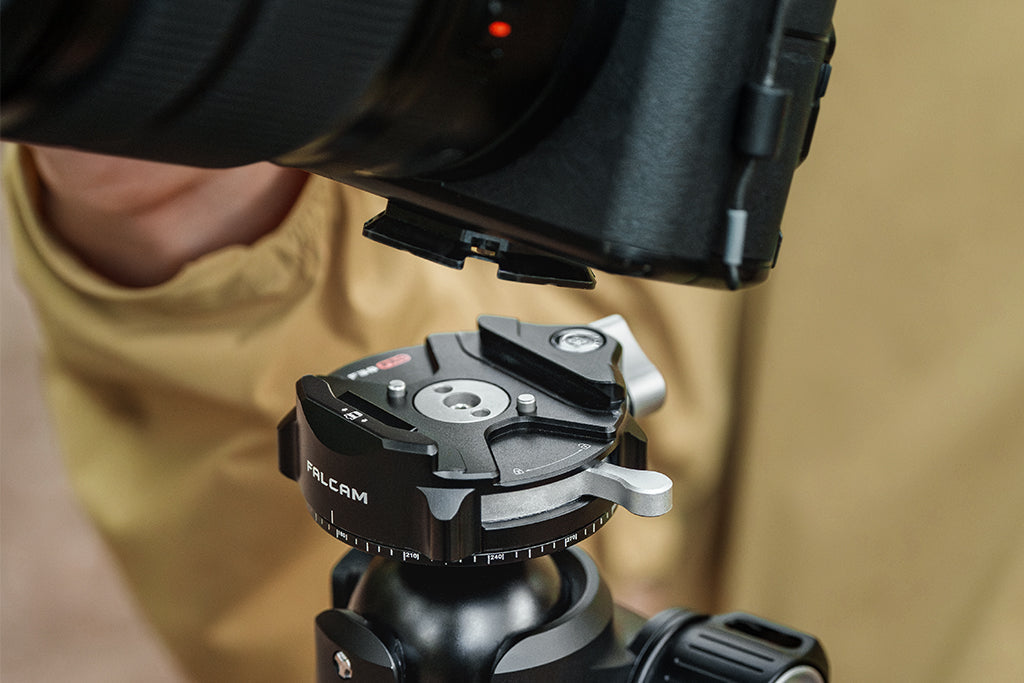
Systems like the F22, F38, and F50 are precision-machined from high-grade aluminum alloys. Why? Because quick-release plates require extremely tight tolerances to ensure "zero-play" stability. Carbon fiber, while strong, is difficult to machine to the sub-millimeter tolerances required for a secure Arca-Swiss dovetail connection.
Load Capacity: Static vs. Dynamic
When you see a rating like "80kg" for a quick-release plate, it is vital to understand that this refers to the Vertical Static Load. This is a laboratory result where weight is applied slowly and vertically.
In the real world, you deal with Dynamic Payloads. If you are running with a 3kg camera on a gimbal, the centrifugal forces and sudden stops can exert "G-forces" that effectively triple the load on the locking pin. For heavy cinema rigs, we recommend the F50 system or "Anti-Deflection" versions of the F38 to ensure the camera doesn't twist under dynamic stress.
6. Practical Field Workflows: Safety and Maintenance
Investing in a high-end material system requires a change in how you handle your gear. Based on patterns from our support and repair data, we recommend the following professional protocols.
The Pre-Shoot Safety Checklist
Before every take, perform these three checks to protect your investment:
- Audible: Listen for the distinct "Click" of the quick-release locking mechanism.
- Tactile: Perform the "Tug Test." Physically pull the camera upward after mounting to ensure the locking pin is fully engaged.
- Visual: Check the safety lock indicator. Many systems use a color-coded (often orange or silver) pin to show if the manual lock is engaged.
Winter Scenario: The Thermal Shock Prevention
Aluminum has high thermal conductivity. In extreme cold, an aluminum plate attached to your camera can act as a "thermal bridge," sucking heat out of the camera's battery and shortening your runtime.
Pro Tip: Attach your aluminum QR plates to your cameras indoors before heading out into the cold. This allows the metal to reach ambient indoor temperature first. When you go outside, the thermal mass of the camera body helps maintain the plate's temperature longer, reducing the "metal-to-skin" shock if you need to adjust the rig with bare hands.
Cable Management and Torque
A heavy, coiled HDMI cable can exert surprising torque on a quick-release plate, potentially causing micro-rotations over time. Always use modular cable clamps (like those in the F22 ecosystem) to provide strain relief. This keeps the tension on the cage rather than the mounting plate, ensuring your ISO 1222:2010 connections remain secure.

The Decision Matrix: Aluminum or Carbon?
To help you decide, we've structured this comparison based on typical creator profiles.
| Feature | Aluminum (High-Grade) | Carbon Fiber (Composite) |
|---|---|---|
| Primary Benefit | Impact resistance & Heat dissipation | Weight savings & Vibration damping |
| Fatigue Life | Finite (Susceptible to cracking) | Exceptional (Resists cyclic stress) |
| Best For | Studio rigs, Heavy Cinema, Cold weather | Travel, Long handheld takes, Vlogging |
| Cost Profile | Economical / Budget-friendly | Premium (50-100% higher) |
| Thermal Property | High conductivity (Thermal bridge) | Low conductivity (Insulating) |
Summary of the "Weight Gap"
Shaving weight is rarely about the number on the scale; it is about the energy remaining at the end of a twelve-hour shoot day. Carbon fiber offers a legitimate performance advantage in vibration damping and fatigue life, but its value is often undermined by poor rig balance and excessive "lever arm" torque.
For the solo creator, the smartest investment is often a hybrid system:
- Carbon Fiber for the large, structural components (tripod legs, monopods) where weight savings are significant.
- Precision Aluminum for the mounting interfaces (quick-release plates, cages) where rigidity and thermal management are paramount.
By focusing on the biomechanics of your rig and the ROI of your workflow, you can build a system that is not just "light," but truly efficient.
Disclaimer: The biomechanical and ergonomic advice provided in this article is for informational purposes only. It is not a substitute for professional medical advice or physical therapy. Individuals with pre-existing wrist, back, or joint conditions should consult a qualified healthcare professional before operating heavy handheld camera equipment for extended periods.