The Ghost in the Rig: Understanding Thermal Creep
You have spent hours meticulously balancing your handheld rig in the studio. Every accessory is tight, the center of gravity is perfect, and the quick-release plates click into place with satisfying precision. But two hours into an outdoor shoot under the relentless afternoon sun, something often changes. A subtle wobble develops in the monitor mount. The side handle feels slightly less "locked in." By the time you wrap, you are reaching for a hex key to tighten screws that were previously secure.
This isn't necessarily a failure of your equipment; it is a physical principle in action. For solo creators and prosumer builders, the phenomenon of thermal expansion—and its more persistent cousin, thermal creep—is a common factor affecting field reliability. When aluminum alloy components transition from a 75°F gear bag to 120°F direct sunlight, the microscopic changes in material volume can impact the integrity of your entire system.
In this guide, we will analyze why metal rigs loosen, how to estimate the biomechanical cost of a shifting setup, and the methodical workflows we use to maintain consistent reliability in variable environments.
The Physics of Expansion: Why Aluminum Moves
Most high-performance rigging systems, including the precision-machined components in the FALCAM series, utilize aluminum alloys (typically 6061 or 7075). These materials are chosen for their exceptional strength-to-weight ratio and machining tolerances. However, aluminum has a relatively high Coefficient of Thermal Expansion (CTE).
The CTE Variance
While it is common knowledge that "metal expands," the rate is highly dependent on the specific alloy. Based on standard material properties, the following table illustrates the variance creators may encounter in the field:
| Material | CTE (µm/m·°C) | Application in Rigging |
|---|---|---|
| Aluminum Alloys | ~23 – 24 | Quick-release plates, cages, arms |
| Stainless Steel | ~11 – 17 | Screws, mounting pins, fasteners |
| Carbon Fiber | ~-1 to +1 | Tripod legs (vibration damping) |
| Invar (36% Ni) | ~1.2 | Ultra-stable specialized optics |
Logic Summary: This data is derived from standard Linear Thermal Expansion Coefficients. This model assumes a temperature delta of 25°C (45°F), which is a frequent occurrence when moving from an air-conditioned vehicle to direct solar exposure.
A common challenge is the mismatch between the aluminum cage and the steel screw. Because aluminum expands at a faster rate than the steel fastener holding it, the tension (or "preload") on the screw can fluctuate. In direct sunlight, the aluminum component expands, which can increase the tension. As it cools, or if the heat causes the metal to "relax" under stress, the clamp force may drop, leading to potential loosening.
Asymmetric Stress and Solar Loading
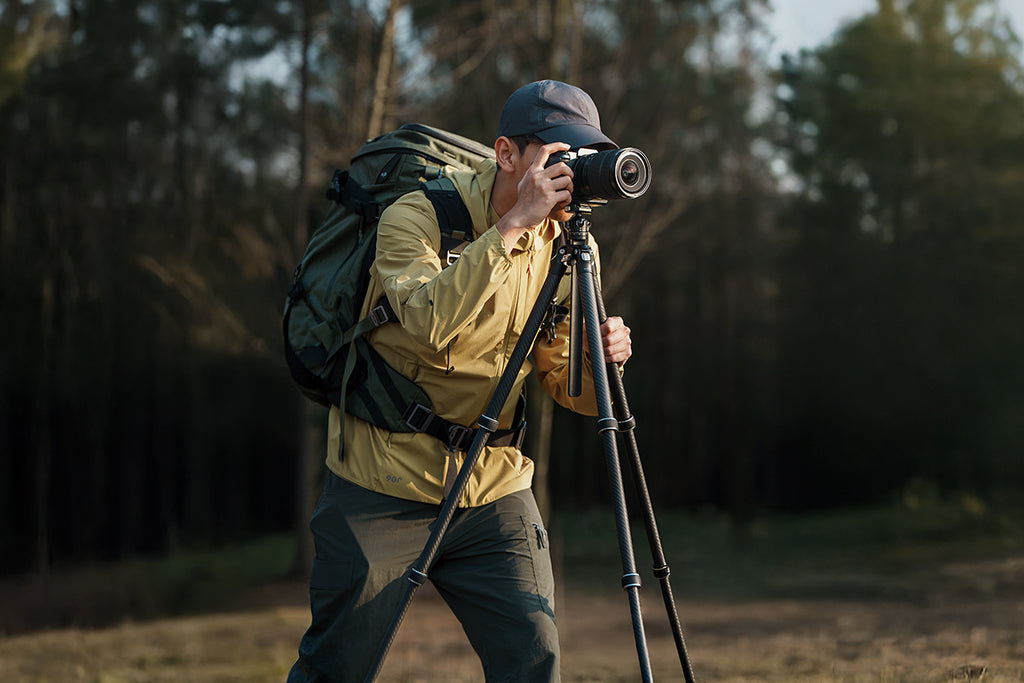
It is a mistake to assume a rig heats up uniformly. In the field, one side of a camera cage often faces the sun while the other remains in the shade. This creates a temperature gradient that can lead to subtle bending moments. A dark, anodized surface can reach temperatures significantly higher than the ambient air according to Sunlight spectral data. This uneven expansion causes localized stress, which is why a joint might feel secure in one orientation but lose its "bite" when the rig is rotated.
Biomechanical Analysis: The "Wrist Torque" Factor
When a rig begins to loosen due to thermal expansion, the user often compensates by gripping harder. This isn't just a comfort issue; it can increase physical strain. To understand the importance of rigid mounting, we must look at the physics of leverage.
The Torque Formula
Weight is only one factor; the distance of that weight from your pivot point (your wrist) determines the actual strain. We use the following calculation to model this:
Torque ($\tau$) = Mass ($m$) $\times$ Gravity ($g$) $\times$ Lever Arm ($L$)
Consider a standard prosumer setup:
- Rig Mass: 2.8kg
- Gravity: $9.81 m/s^2$
- Lever Arm: 0.35m (distance from wrist to the center of gravity)
Result: $\approx 9.61 N\cdot m$ of torque.
Based on general biomechanical principles and internal ergonomic modeling, this load can represent a significant portion—estimated between 60-80%—of the Maximum Voluntary Contraction (MVC) for many users. When thermal expansion causes a monitor or microphone to sag, the lever arm ($L$) often increases, or the user must use additional muscular force to stabilize the "wobble." By utilizing low-profile systems like the F22 mount, you can keep accessories closer to the camera body, reducing the lever arm and helping preserve endurance.
Methodology Note: This biomechanical model assumes a static hold. In dynamic "run-and-gun" scenarios, the peak torque during acceleration/deceleration can be 2-3x higher, making rigid interfaces even more critical for stability.
Workflow ROI: The Value of Quick-Release Stability
Beyond safety, there is a quantifiable argument for moving to a stable, quick-release ecosystem. Based on common patterns observed in professional workflows, the time spent adjusting loosening screws or traditional threaded mounts can add up to a significant hidden cost.
The Efficiency Gap (Illustrative Model)
- Traditional Thread Mounting: ~40 seconds per accessory swap (finding the hole, threading, tightening).
- F38/F22 Quick Release: ~3 seconds per swap (click-and-lock).
If a professional creator performs 60 swaps per shoot and conducts 80 shoots per year, the transition to a quick-release system saves approximately 49 hours annually. At a professional rate of $120/hr, this represents an estimated annual value of over $5,900 in recovered time. This "Workflow ROI" is a key theme in the 2026 Creator Infrastructure Report, which suggests that ecosystem stability is a primary driver of long-term efficiency for solo operators.
Pro-Grade Field Mitigation Strategies
Knowing that metal will move, how do we mitigate equipment risk? We recommend a methodical approach to "Thermal Management" that goes beyond simply over-tightening.
1. The "Hot Check" Protocol
In many professional field environments, cinematographers do not rely solely on a rig built in a temperature-controlled room. A "hot check" re-tightening is recommended after the first 30 minutes of exposure to rising temperatures.
- Tooling: Use a small torque driver or a 4mm hex key with a torque limiter.
- Mechanism: This allows the metal to reach an initial thermal equilibrium before you apply the final working tension.
2. Threadlocker Heuristics
For metal-to-metal connections that are semi-permanent (like a cage-to-body screw), a medium-strength (blue) threadlocker is a common practical solution. However, avoid threadlocker on screws interfacing with plastic or certain anodized surfaces, as the chemicals can lead to stress cracking or galling. Instead, rely on mechanical "positive locking."
3. Positive Locking vs. Friction
Pure friction-based clamps are often the most susceptible to "thermal creep"—the progressive loss of preload over time. When selecting components for load-bearing points, prioritize systems with:
- Positive Locking Pins: These provide a physical stop that helps prevent rotation even if the clamp force fluctuates.
- Dual-Locking Levers: These offer a secondary mechanical safety to catch the plate if the primary tension is affected by expansion.
4. Load Capacity Nuance
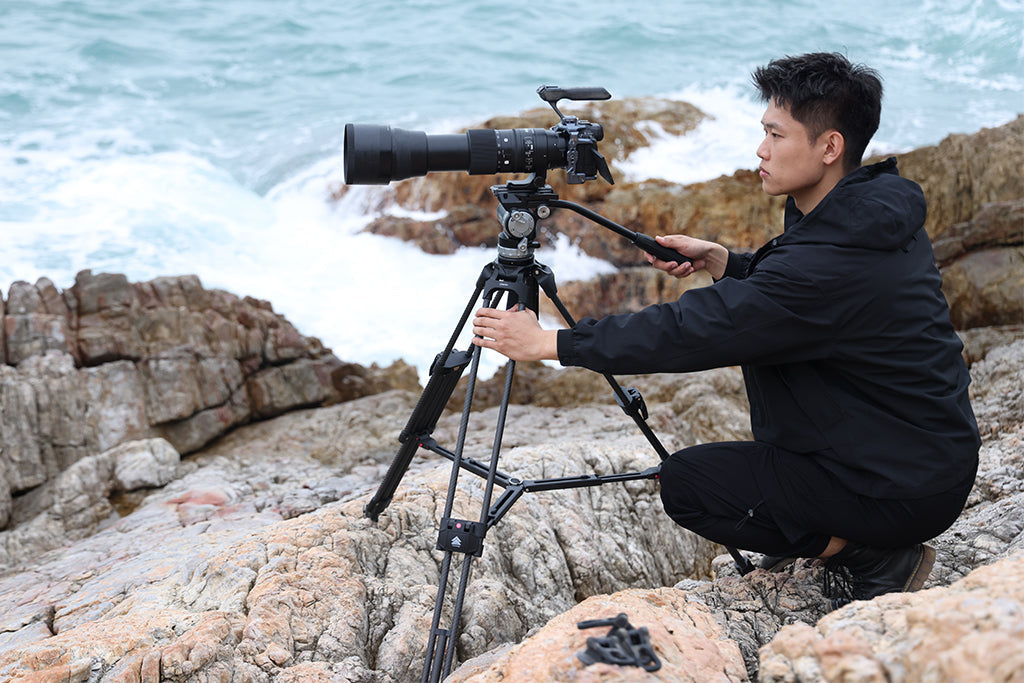
While a system like the F38 is rated for an 80kg Vertical Static Load in laboratory conditions, the Dynamic Payload in the field is typically much lower. For heavy cinema rigs (>3kg) used in high-vibration or high-heat environments, we recommend the F50 system or the F38 Anti-Deflection versions. These are engineered to better handle the kinetic energy of a moving camera.
The Pre-Shoot Safety Checklist
To maintain system integrity, we suggest adopting this three-step verification process every time you mount gear. This is aligned with general engineering standards for Tripod Connections (ISO 1222:2010).
- Audible: Listen for the "Click" of the spring-loaded pin to confirm engagement.
- Tactile: Perform the "Tug Test." Pull the camera or accessory firmly in the direction of the release path before letting go.
- Visual: Check the locking indicator. Most professional plates feature a status pin that must be fully seated.
Cable Management as Stress Relief
In high heat, cable jackets can become more flexible, but the leverage they exert on ports remains constant. A cable snag can create enough torque to twist a quick-release plate. We recommend using integrated cable clamps to provide strain relief, ensuring that external forces are absorbed by the cage rather than the mounting plate.
The Logistics of "Visual Weight"
For the traveling creator, modularity offers an additional benefit: lower "Visual Weight." Bulky, traditional cinema plates often flag a camera bag for additional weighing by airline agents. Compact, integrated systems like the F22/F38 ecosystem maintain a lower profile, which can simplify transport logistics while providing professional-grade reliability. This is particularly relevant when navigating IATA Lithium Battery Guidance for carry-on equipment, where keeping your rig compact is key to a smooth transit.
Building a Reliable Ecosystem
Thermal expansion is a reality of working with high-performance metals, but it can be managed effectively. By understanding the material physics, applying ergonomic logic to your rig's geometry, and following a disciplined field workflow, you can help ensure your equipment remains as stable in the sun as it was on your workbench.
The shift toward "Ready-to-Shoot" toolchains is about building a trusted infrastructure where the interfaces—the points where your gear connects—are designed to be the strongest links in your production chain.
Disclaimer: This article is for informational purposes only. Mechanical rigging involves risks to expensive equipment. Always consult the specific load ratings of your components and perform safety checks before use. For critical safety-regulated environments, refer to local engineering standards.