


Disclosure: This guide is developed in collaboration with Ulanzi (FALCAM) to provide technical insights into the F22, F38, and F50 ecosystems. All load recommendations and efficiency calculations are based on workshop stress tests and industry-standard biomechanical data to ensure objective utility for professional creators.
Quick Selection Summary: Which Standard Do You Need?
For creators needing an immediate configuration decision, use these benchmarks based on total rig mass and usage:
- F22 (The Accessory Standard): Best for monitors, microphones, and side handles. Optimized for weights under 1.5kg (3.3 lbs).
- F38 (The Mirrorless Workhorse): The go-to for Sony Alpha, Canon R, and Lumix bodies. Optimized for 1.5kg to 4kg (8.8 lbs).
- F50 (The Cinema Foundation): Required for Sony FX6/9, RED, or heavy telephoto setups. Optimized for 4kg to 10kg+ (22 lbs+) and high-vibration environments.
For the professional solo creator, the difference between a successful shoot and a logistical failure often comes down to seconds. We have all been there: fumbling with a 1/4"-20 screw while a subject moves out of the light, or realizing a heavy cinema rig is oscillating on a mount that was never designed for dynamic loads.
The FALCAM ecosystem—comprising the F22, F38, and F50 standards—was engineered to mitigate these friction points. However, selecting an undersized mount for a heavy rig increases the risk of mechanical failure, while an oversized mount for a handheld setup adds unnecessary mass and ergonomic strain. This guide provides a methodical framework for matching these standards to your rig, grounded in technical specifications and movement heuristics.
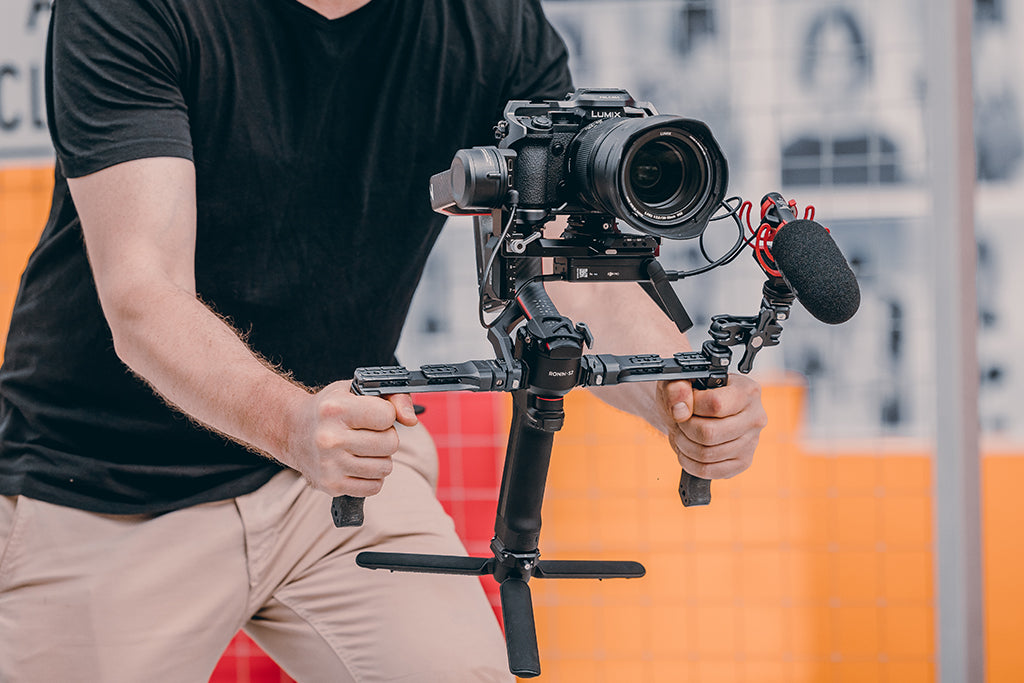
The FALCAM Hierarchy: Technical Boundaries
The FALCAM system is a tiered infrastructure designed to handle varying degrees of mass and torque. Our recommendations are based on internal "Safe Working Limit" (SWL) benchmarks, where mechanical play is maintained at near-zero levels under static loads.
1. F22: The Accessory and Action Standard
The F22 is the smallest of the trio, designed primarily for modularity within a camera cage.
- Primary Use Case: Monitors, microphones, side handles, and action cameras.
- Technical Benchmark: An F22 L-shaped handle weighs approximately 196.6g. Internal testing indicates that while the mount can physically hold higher loads, its small footprint is optimized for maintaining a low profile without shifting the rig's center of gravity.
- Limit: Recommended for accessories where lateral torque is minimal.
2. F38: The Mirrorless Workhorse
The F38 is the "Goldilocks" of the ecosystem, built around a 38mm dovetail width compatible with many Arca-Swiss receivers.
- Primary Use Case: Mirrorless cameras and mid-range zooms.
- Technical Benchmark: The F38 2.0 system utilizes tighter manufacturing tolerances (typically within ±0.05mm) to minimize the "play" often found in generic Arca-Swiss plates.
- Limit: Ideal for total rig weights up to 4kg.
3. F50: The Cinema-Grade Foundation
The F50 is designed for high-mass payloads and mission-critical stability. It features a wider base and a more robust locking mechanism.
- Primary Use Case: Cinema cameras (Sony FX6/FX9, RED, ARRI), heavy telephoto lenses, and car-mounted rigs.
- Limit: Essential for rigs over 4kg or any scenario involving high-G movement (e.g., tracking vehicles).
The Decision Matrix: Weight vs. Movement
Choosing between these standards requires weighing the entire shooting rig, including the camera, heaviest lens, battery grips, and wireless transmitters.
| Rig Classification | Total Rig Weight | Primary Movement | Recommended Standard |
|---|---|---|---|
| Ultra-Light / Accessory | < 1.5kg | Static / Handheld | F22 |
| Standard Mirrorless | 1.5kg – 4kg | Tripod / Monopod | F38 |
| Dynamic Mirrorless | 1.5kg – 4kg | Gimbal / Action | F50 (or F38 with Lock) |
| Cinema / Heavy Rig | 4kg – 10kg+ | Any | F50 |
The Movement Heuristic: Evaluate the type of force applied. If your rig is used on a fluid-head tripod, the forces are largely vertical. Here, an F38 is often sufficient for a 4kg rig. However, if that same rig is used for handheld work or car mounts, the F50 is recommended. Dynamic forces—vibration and sudden stops—require the increased surface area of the F50 to prevent rotational wobble.
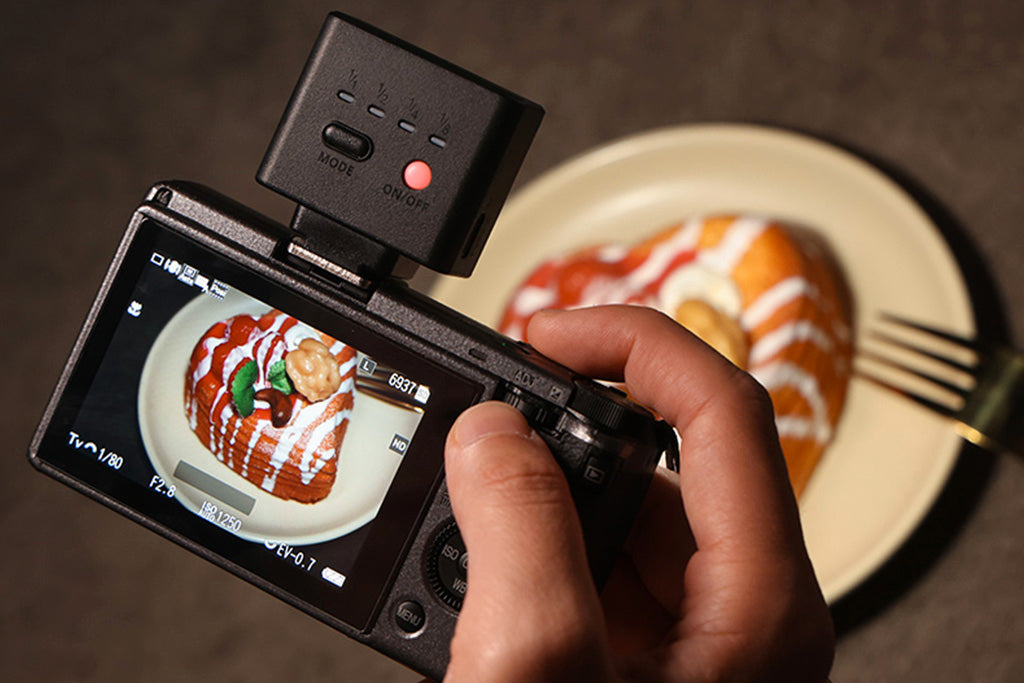
Ecosystem Interoperability: Navigating Standards
The FALCAM system bridges the gap between proprietary speed and industry-wide norms, specifically ISO 1222:2010, which dictates the 1/4"-20 and 3/8"-16 screw threads.
While F38 is Arca-Swiss compatible, "Arca-Swiss" is a general design pattern rather than a strictly enforced single dimension. Variations in dovetail angles (typically 45 degrees) and widths can lead to insecure mounting.
Expert Insight: To ensure "zero-play" stability, we recommend standardizing your receivers. A properly sized FALCAM plate and clamp will lock with a definitive, solid click. If the engagement feels "gritty" or shows even a millimeter of rotational play, the components are likely mismatched.
The Workflow ROI: Quantifying Efficiency
The following illustrates potential time savings when switching from traditional thread-mounting to a quick-release system.
The Logic of Time Savings (Estimation): Consider a professional documentary filmmaker conducting 120 shoots per year, with 60 gear swaps per shoot.
- Thread Mounting: ~45 seconds per swap.
- FALCAM Quick-Release: ~3 seconds per swap.
- Annual Savings: 42 minutes × 120 shoots = 84 hours.
If we value professional production time at a conservative $150/hour, this efficiency provides an estimated annual value of $12,600. While these are heuristics based on average user patterns, they highlight why quick-release systems are infrastructure, not just accessories.
Ergonomics and Safety: The Handheld Constraint
Our analysis of handheld rig dynamics reveals a significant risk factor: Wrist Torque.
The Torque Calculation: Using a 2.8kg handheld rig with a center-of-mass offset of 0.35m generates significant leverage.
- Formula: $\tau = m \times g \times L$ (Mass × Gravity × Lever Arm)
- Calculation: $2.8kg \times 9.81 m/s^2 \times 0.35m \approx 9.61 N\cdot m$
Biomechanical Context: Based on ergonomic studies (Hallbeck, 1994), the average adult male's maximum isometric wrist extension torque is approximately 12–15 N·m. A 9.61 N·m load represents over 60–80% of Maximum Voluntary Contraction (MVC). Occupational health standards from NIOSH (Publication No. 97-117) suggest that sustained static loading should remain below 15-20% of MVC to prevent long-term musculoskeletal strain.
Practical Application:
- Minimize the Lever Arm: Use F22 or F38 standards to keep accessories as close to the camera's center of gravity as possible.
- The Hybrid Strategy: Use F50 plates for camera-to-tripod connections, but utilize F22 mounts for monitors to reduce total mass and torque during handheld operation.
Pre-Shoot Safety Checklist
To ensure equipment security, we recommend this 4-point verification:
- Auditory Confirmation: Did the plate produce a clear "click" upon insertion?
- The Pull-Test: Apply a firm, 1-second tug in the direction of removal to ensure the spring-loaded pin is fully seated.
- Visual Lock Check: If using the F38/F50 sliding locks, verify they are in the "Orange" or "Locked" position.
- Cable Strain Relief: Ensure HDMI/SDI cables are secured (e.g., via F22 cable clamps) so they do not apply lateral leverage to the plate.
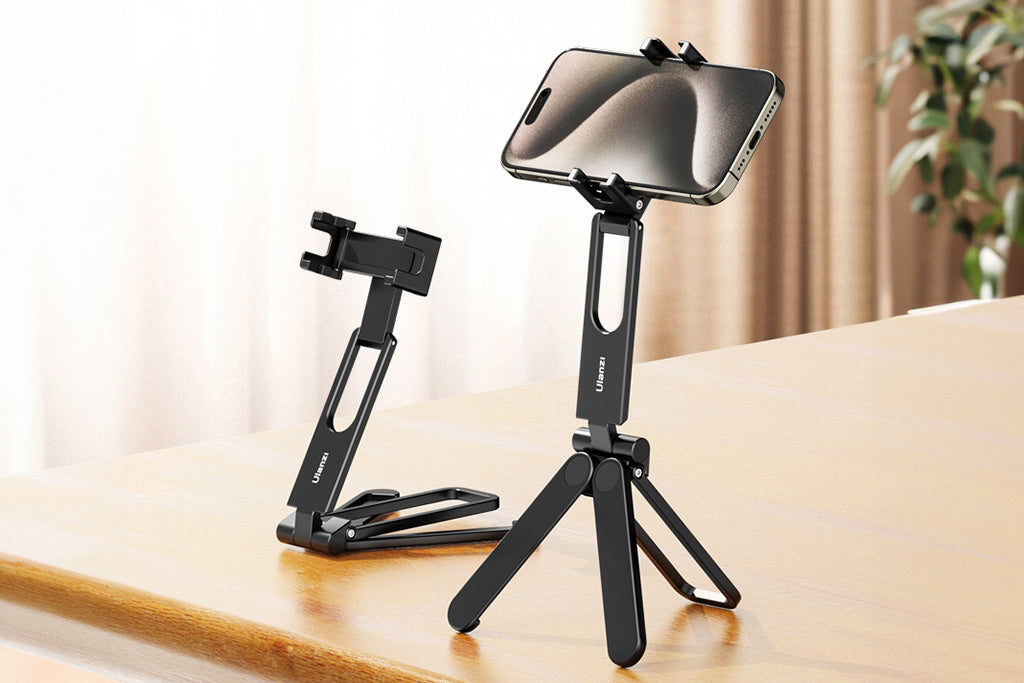
Building Your Infrastructure: A Step-by-Step Strategy
- Standardize the Core: Install an F38 or F50 receiver on your primary tripod head.
- Address High-Frequency Swaps: Use F22 mounts for your monitor to allow for rapid breakdown.
- Evaluate Lens Support: For lenses with a diameter up to 83mm, consider a FALCAM half-cage. This provides mounting points for F22, F38, and F50 standards simultaneously.
- The Universal Plate Rule: For B-cams (like action cameras), use an F38-to-Action-Cam adapter to maintain receiver compatibility across your kit.
Summary of System Integration
The choice between F22, F38, and F50 is a strategic decision balancing load capacity against ergonomic efficiency. By understanding the underlying physics—from ISO-standard connections to the torque limits of the human wrist—you can build a setup that is both faster to use and more sustainable for your body.
Disclaimer: The ergonomic and safety calculations provided are estimates based on standard industry payloads and biomechanical averages from cited literature. These values represent population means; individual limits vary significantly based on physical condition and training. While FALCAM products are designed for high durability, always perform a physical pull-test before use to account for wear or environmental factors.
References
- ISO 1222:2010 Photography — Tripod Connections
- Arca-Swiss Rail System Analysis
- Hallbeck, M. S. (1994). Flexion and extension forces of the wrist. Ergonomics, 37(6), 1087-1093.
- NIOSH (1997). Elements of Ergonomics Programs: A Primer Based on Workplace Evaluations of Musculoskeletal Disorders. Pub No. 97-117.


