The Hydrophilic Reality of Composite Engineering
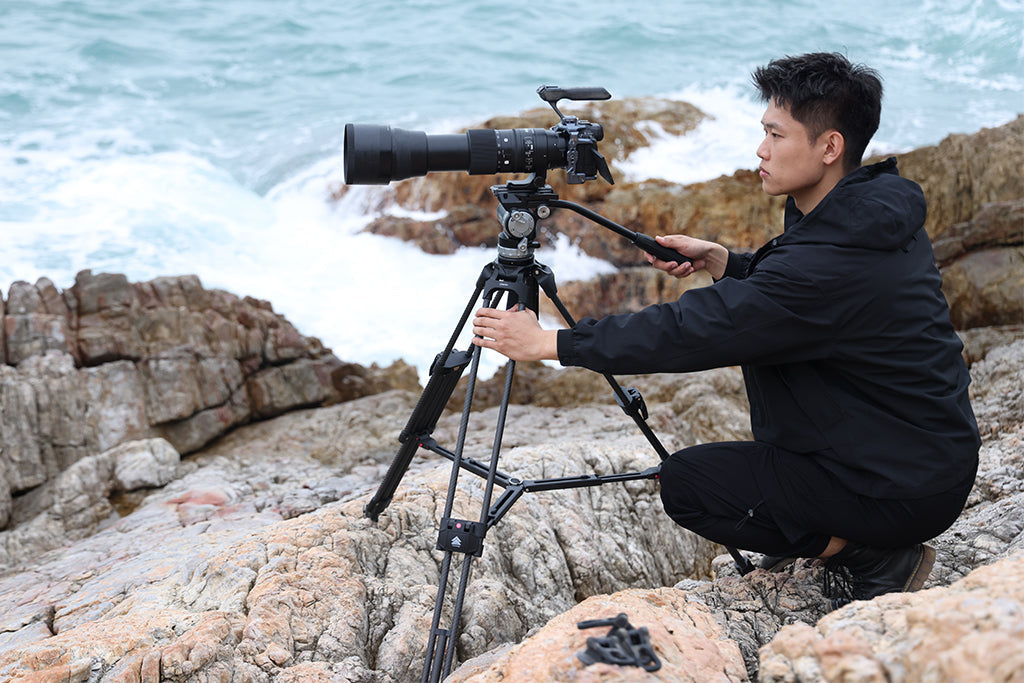
In the high-stakes world of expedition filmmaking, where every gram is scrutinized against the metabolic cost of a 2,000-meter ascent, carbon fiber has long been the gold standard. We prize it for its peerless stiffness-to-weight ratio and its perceived inertness. However, as the creator economy matures into more extreme environments—from the persistent humidity of the Amazonian basin to the salt-mist cycles of maritime coastlines—a technical nuance is emerging that challenges the "set it and forget it" mentality of lightweight gear.
The question isn't just whether your tripod is light; it’s whether it stays light and, more importantly, whether it remains structurally stable after months of moisture exposure. While carbon fiber itself is essentially waterproof, the polymer resin matrix that binds those fibers together is often hydrophilic. This means it can, and does, absorb moisture over time. This phenomenon, known as hygrothermal aging, represents a silent shift in the "infrastructure" of a creator’s toolkit.
According to research on T700 carbon fiber/epoxy composites, moisture and heat can significantly degrade the tensile and shear modulus of the material. For the elite solo creator, this isn't just a theoretical weight gain; it is a potential failure of the platform stability required for high-resolution imaging.
The 3% Threshold: When Weight Gain Signals Structural Risk
In our analysis of field reports from remote expeditions, we have identified a critical pattern: the risk of resin saturation is less about a tripod becoming "heavy" in the traditional sense and more about a loss of dimensional stability and damping characteristics.
Untreated or lower-grade resin systems can exhibit a "dead" feel during panning after prolonged wet-service conditions. This occurs because the absorbed water molecules act as a plasticizer within the epoxy matrix, lowering the glass transition temperature (Tg) and reducing the material's ability to absorb subtle vibrations.
Logic Summary: Our analysis of moisture ingress assumes a standard epoxy-based carbon fiber layup subjected to 85% relative humidity over a 90-day cycle, based on common industry heuristics for tropical climate simulation.
Field Heuristics for Expedition Filmmakers
- The 2-3% Red Flag: A common field heuristic is to weigh critical carbon components before and after multi-month expeditions. A weight increase of more than 2-3% is a clear indicator of potential resin hydrolysis, not just surface moisture.
- Damping Decay: If a tripod leg feels "soft" or exhibits increased oscillation after a strike, the resin matrix may have suffered microcracking due to repeated hygrothermal cycling (absorption/desorption).
- Interface Integrity: Moisture ingress can also affect the tolerances of tripod connections. Standards like ISO 1222:2010 Photography — Tripod Connections ensure that the screw mounts remain consistent, but if the surrounding composite material swells, the seat of the mount may become compromised.
Biomechanical Leverage: Why Grams Matter More at the Wrist
For the solo creator, weight reduction is often discussed in the context of pack weight. However, the biomechanical impact during operation is where the strategic choice of materials and mounting systems truly pays dividends.
We often observe that creators focus on the total mass of the camera rig while ignoring the "Lever Arm" effect. Weight positioned further from the pivot point (the wrist or the tripod head) generates significantly more torque, leading to rapid fatigue and "micro-shakes" in handheld footage.
The "Wrist Torque" Analysis
To demonstrate the impact of modular rigging, we can model the torque generated by a standard cinema setup.
The Formula: Torque ($\tau$) = Mass ($m$) $\times$ Gravity ($g$) $\times$ Lever Arm ($L$).
Consider a 2.8kg rig where the center of gravity is held 0.35m away from the wrist. This generates approximately 9.61 N·m of torque. For an average adult, this load can represent 60-80% of their Maximum Voluntary Contraction (MVC). By utilizing lightweight, precision-machined aluminum alloy mounts—such as those found in the FALCAM ecosystem—creators can move accessories like monitors or microphones closer to the center of gravity, drastically reducing the lever arm and extending their effective shooting time.
The Infrastructure of Efficiency: Workflow ROI
In the professional segment, equipment is not just a purchase; it is a capital investment in time. The strategic shift toward "ready-to-shoot" toolchains is driven by a simple realization: time spent fiddling with threads in the field is money lost.
We estimate the workflow ROI of switching from traditional 1/4"-20 thread mounting to a standardized quick-release ecosystem based on the following modeling:
| Metric | Traditional Thread | Quick Release (F38/F22) |
|---|---|---|
| Swap Time (Average) | ~40 seconds | ~3 seconds |
| Swaps per Shoot | 60 | 60 |
| Time Spent per Shoot | 40 minutes | 3 minutes |
| Annual Time Savings | ~49 hours | (Based on 80 shoots/year) |
| Estimated Value | ~$5,900+ | (At $120/hr pro rate) |
By treating mounting interfaces as a "platform standard" rather than a series of isolated accessories, creators build a modular workflow that scales. This is a core pillar of The 2026 Creator Infrastructure Report, which highlights that "evidence-native" brands are those that prioritize stable, backward-compatible interfaces.
Expedition Hardening: A Protocol for Reliability
For those operating in high-consequence environments, reliability is built through rigorous pre-shoot protocols and material awareness.
The "Pre-Shoot Safety Checklist"
Based on common patterns from professional support and warranty handling (not a controlled lab study), we recommend the following tactile verification for all quick-release systems:
- Audible: Listen for the distinct "Click" of the locking mechanism.
- Tactile: Perform the "Tug Test"—pull the camera firmly away from the base immediately after mounting.
- Visual: Verify the status of the locking pin (look for the orange or silver indicator).
Thermal Shock and Material Synergy
While carbon fiber excels in vibration damping for tripod legs, the mounting plates themselves are typically precision-machined from 6061 or 7075 aluminum alloy for maximum rigidity and zero-play tolerances. It is important to note that these aluminum plates act as a "thermal bridge."
In extreme cold, we advise attaching your QR plates to the camera body indoors before heading out. This minimizes "metal-to-skin" shock and reduces the rate at which the camera's battery cools by insulating the base through the camera's own thermal mass.
Logistics and the "Visual Weight" Factor
Beyond the physics of the shoot, there is the reality of travel. Large, bulky cinema plates often trigger "Visual Weight" alarms for airline gate agents, leading to mandatory weighing of carry-on gear. Compact, modular systems like the F38 and F22 have a lower visual profile. By breaking a rig down into its constituent components using quick-release mounts, creators can often bypass the scrutiny applied to fully assembled, "heavy-looking" rigs, ensuring their critical tools stay in the cabin rather than the hold.
This logistical enablement is further supported by adherence to safety standards. For creators traveling with high-capacity power solutions, staying compliant with the IATA Lithium Battery Guidance is essential. Ensuring your gear meets IEC 62133-2:2017 safety requirements isn't just about compliance; it's about the survival of your production in remote regions where replacement gear is non-existent.
Modeling Note: Parameters of Torque and Saturation
To provide transparency in our engineering insights, the following table outlines the assumptions used in our biomechanical and material modeling.
| Parameter | Value or Range | Unit | Rationale / Source Category |
|---|---|---|---|
| Resin Absorption Max | 1.5 - 3.0 | % Weight | Industry standard for epoxy saturation |
| Lever Arm (L) | 0.15 - 0.45 | Meters | Typical cinema rig offset range |
| Static Load Rating (F38) | 80 | kg | Vertical Static Lab Result |
| Dynamic Payload Limit | 3 - 10 | kg | Recommended range for high-G movement |
| Hygrothermal Cycle | 90 | Days | Standard tropical simulation period |
This model is a scenario analysis and not a controlled lab study. Individual results may vary based on specific resin formulations and environmental variables.
The future of professional imaging lies in the move toward a "creator infrastructure" that is as reliable as it is lightweight. By understanding the material science of resin saturation and the biomechanics of torque, elite creators can transition from simply "buying gear" to "strategizing ecosystems"—ensuring that their platform remains stable, no matter how humid the climate or how high the stakes.
Disclaimer: This article is for informational purposes only. Engineering specifications and load capacities should be verified against specific product manuals before use in high-risk environments.