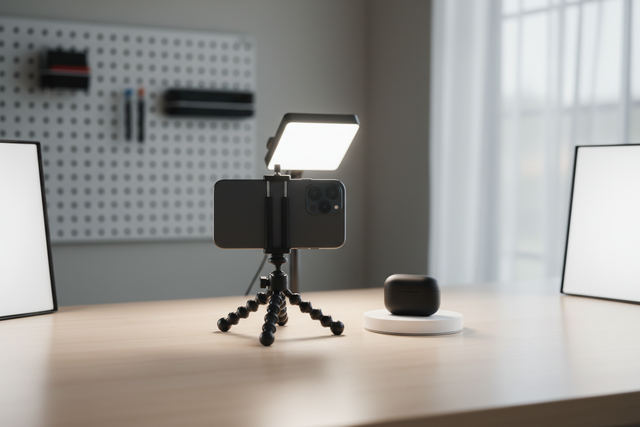
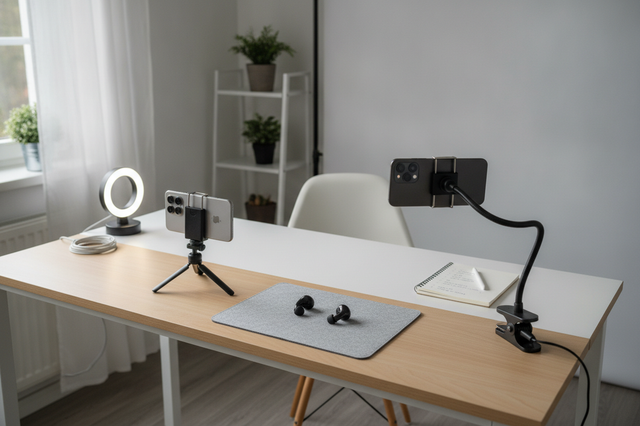
A MagSafe phone tripod can be reliable with a case on, but there is no universal yes. The best starting point is a case with a correctly positioned magnetic interface, a flush, centered connection, and no wallet, grip, or other layer interfering with contact. Phone size, case weight, orientation, and movement still determine whether that connection is suitable for your shoot.

Test the exact phone, case, accessories, and tripod together before filming. If the phone rotates, tilts, sags, or separates during the orientations and gentle movement your shoot requires, treat the setup as a poor fit and switch to threaded or mechanical support.
Start With the Case You Use
The case is often the first compatibility limit. A thin case with built-in magnets is a more promising starting point than a thick or nonmagnetic case, but the label alone does not prove that the phone will stay secure on a tripod.
Thin and Magnetic Cases
A thinner case with correctly positioned built-in magnets usually presents a cleaner interface because there are fewer layers between the phone and mount. That still does not establish fit: the case must match the phone's magnetic layout, and the tripod must sit centered and flush rather than resting on a raised edge or uneven surface.
Check the actual case for a magnetic ring or other alignment feature intended for your phone. Then attach the phone without extra accessories and watch for slow rotation when the mount head is tilted. A slim case without the right magnetic interface may perform worse than a slightly thicker case designed for that interface.

If you are comparing cases before buying, MagSafe case accessories can be a useful place to review compatible accessory categories. Use the complete case-and-mount combination—not a bare-phone result—as the deciding test.
Thick or Nonmagnetic Cases
Treat these case traits as reasons to test more carefully before filming:
- Thick, layered, shock-absorbing, wallet-style, or heavily textured construction can increase the gap or make the contact surface uneven.
- A nonmagnetic case should not be treated like a MagSafe-compatible case unless it includes a suitable, correctly positioned magnetic interface.
- Remove detachable wallets, cards, grips, and similar accessories during the first check. Apple's MagSafe instructions specifically warn against placing cards, key fobs, and comparable items between an iPhone and a MagSafe accessory.
There is no reliable universal case-thickness cutoff for tripod use. If the case adds layers, shifts the phone away from the mount, or leaves a raised texture between the surfaces, expect a less predictable connection and test close to a safe surface.
Confirm the Magnetic Alignment
The key question is not simply whether the phone is an iPhone or Android model. The phone or case must present a magnetic interface that centers on the mount and remains flush in the orientations you plan to use; native MagSafe, a magnetic case, and an added adapter are different setups.
iPhone and MagSafe-Ready Cases
A supported iPhone paired with a MagSafe-ready case is the clearest case-on option because the accessory interface is designed to align with the phone or case. Apple's MagSafe alignment guidance describes accessories snapping into position on supported iPhones or MagSafe cases, with magnets helping ensure alignment. That establishes an alignment principle, not a guarantee of tripod holding strength or drop resistance.
Before filming, verify that the mount sits flat and centered in both portrait and landscape. Tilt the head gradually and look for slow rotation, edge lifting, or a phone that settles out of level. General wireless-charging compatibility should not be treated as proof of native MagSafe magnetic attachment; non-MagSafe iPhones need a separate adapter or ring evaluation (Apple's compatibility guidance).
Android Phones and Magnetic Adapters
Android compatibility depends on the case or adapter creating the right magnetic interface. Phone branding by itself does not establish MagSafe-style compatibility, and an added ring can introduce its own placement, adhesion, clearance, and balance variables.
| Setup | What to Verify |
|---|---|
| Android phone with a magnetic case | Ring position, flush contact, case clearance, portrait and landscape stability |
| Android phone with an added ring or adapter | Adhesion, centered placement, surface compatibility, clearance, and stability after tilting |
Some product pages state Android support or describe a magnetic ring for non-MagSafe phones, but those are model-specific claims. Check the current compatibility details for the mount you are considering, then test the exact phone-and-case configuration. Do not assume an Android adapter behaves like a native MagSafe case.
For a broader comparison after identifying the interface you need, browse phone mount options without treating a collection listing as proof of fit for your particular case.
Match the Mount to Phone Weight
Phone size, case weight, and accessories change the leverage on the magnetic connection. A larger phone, such as an iPhone Pro Max-class model, may place more demand on the interface, especially in portrait orientation or when the tripod head is tilted, so a simple “it attached” check is not enough.
Use the actual phone, case, and accessories for the balance check. Remove off-center grips, wallets, lights, or other attachments first, then center the phone and compare portrait with landscape. An accessory extending from one side can make the connection behave differently even when the phone itself is centered.
A product's published load or magnetic-force figures apply to that named model and its stated configuration. They are not a universal phone-weight rule, and they do not prove that every case, angle, or moving setup will hold. If you are considering a particular compact magnetic tripod, compare its current specifications with your complete setup and still perform the case-on test.
The practical rule is conditional: the heavier or more off-center the setup becomes, the less useful an initial resting attachment is as evidence. A Pro Max-class phone may work in a centered, controlled configuration, but it deserves a stricter tilt and movement check rather than an automatic yes or no.
Account for Movement While Filming
Stability with a case depends on the shoot, not just on the connection at rest. A level, low-consequence desk shot is less demanding than an elevated, moving, vibrating, or frequently adjusted setup, so judge the mount against the conditions you will actually create.
Desk and Static Shots
A level desk or studio shot generally places fewer demands on the connection because the phone remains close to a surface and movement is limited. Even here, recheck after framing: the phone should remain centered and level when you change from portrait to landscape or adjust the head.
A magnetic setup may be reasonable for this type of filming when the complete configuration remains stable through the required orientation and angle changes. Keep the phone close to a safe surface during the initial test, and do not treat a quiet desk attachment as evidence that the same setup is ready for walking or elevated footage.
Active or Elevated Filming
Move toward more secure support when the shoot includes:
- Walking, vibration, bumps, wind, or repeated pan-and-tilt adjustments.
- An elevated position where the phone could fall farther or strike a hard surface.
- A paid shoot, important recording, or location where a failure would interrupt work.
- A setup that already shows rotation, tilt, sag, or separation during a controlled check.
There is no useful universal wind or movement threshold in this context. The observable result matters more: if the phone shifts under the conditions you expect, the magnetic connection is not a dependable fit for that shoot. The magnetic attachment mechanics explain the convenience-versus-security tradeoff; your final decision still depends on the exact configuration.
Run a Case-On Compatibility Check
Use this practical, conservative checklist before filming. It is a configuration check, not a drop test, engineering certification, or guarantee of performance in every environment.
- Install the complete setup. Put on the exact case and add the accessories you expect to use. For the first check, remove detachable wallets, cards, grips, and other objects between the phone and mount.
- Center and attach the phone. Confirm that the magnetic interface sits over the mount's contact area and that the phone rests flush rather than on a raised case edge.
- Check portrait and landscape. Frame the phone in each required orientation. Look for immediate rotation, edge lift, or a connection that feels uneven.
- Tilt gradually. Change the tripod head angle slowly. Watch for the phone drifting out of level, sagging, or rotating under its own weight.
- Apply gentle, controlled movement. Keep the setup close to a safe surface and use only the light movement relevant to your shoot. Do not shake, drop, or deliberately impact the phone.
- Use the result as the stop condition. If the phone rotates, tilts, sags, or separates, reject that configuration for the intended filming conditions and switch support methods or reduce the setup's demands.
- Repeat after changes. Recheck whenever you change the case, phone, accessories, mount angle, or filming location. A passing test applies to that configuration, not to every future combination.
A successful resting attachment answers only one question: whether the magnets connect initially. The more useful question is whether the complete setup stays centered and attached through the orientations and gentle movement the shoot requires. For additional phone tripod setup tips, use the same case-on, configuration-specific approach.
Choose Threaded Support When the Hold Is Marginal
Magnetic mounting is a speed-and-convenience option for a verified setup, not a universal replacement for threaded or mechanically clamped support. Let both the test result and the consequence of failure decide which approach is appropriate.
Keep the Magnetic Setup
Keep the magnetic setup when all of these conditions are true:
- The case or adapter presents a centered, flush interface.
- The phone stays stable in every required orientation.
- The complete setup remains level during the gentle movement relevant to the shoot.
- The phone is close to a safe surface or the filming environment is controlled.
- A failure would not create an unacceptable equipment, work, or personal hazard.
Recheck after changing the phone, case, accessories, mount angle, or location. Even if the interface is unchanged, added leverage or a different filming position can change the result.
Switch to Mechanical Support
Choose threaded or mechanical support when the connection remains marginal, the phone is heavy or off-center, the setup is elevated or moving, or a fall would be costly. Persistent rotation, tilt, sag, or separation is enough to reject the magnetic configuration for that shoot; you do not need to wait for a complete detachment.
This is especially relevant when deciding whether a magnetic phone tripod is suitable for active video rather than a controlled desk shot. If the convenience of quick attachment conflicts with the consequence of losing the phone, use the more secure support style and verify its clamp, thread, and device compatibility separately. You can compare phone mounts after identifying those requirements, but the collection itself cannot determine fit.
FAQs About a MagSafe Phone Tripod
These FAQs focus on the compatibility questions that vary most by setup: larger phones, Android adapters, and movement-related failures.
Will a MagSafe Tripod Hold an iPhone Pro Max With a Case?
It may, but test the complete setup in portrait and landscape. A Pro Max-class phone that rotates or sags during a gradual tilt has not passed for that use.
Does a MagSafe Tripod Work With Android?
It can with a correctly positioned magnetic case, ring, or adapter. Verify adhesion, clearance, and stability; the phone label alone is not enough.
What If the Phone Slowly Rotates?
Treat rotation as a failed check. Recenter the phone and remove accessories once, then switch to mechanical support if the movement continues.
Is It Good Enough for Outdoor Filming?
Only if the tested setup stays centered and level under the expected orientations and gentle movement. Use mechanical support when bumps, elevation, or the consequence of a fall make the magnetic hold marginal.