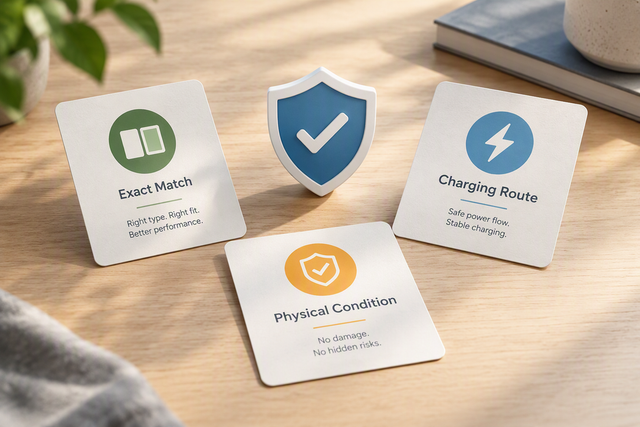
Key Takeaways: Protecting Your Port in the Field
If you are building a mobile rig for high-action environments, the goal isn't just "strength"—it's energy management. Here are the three most critical adjustments to prevent port shear:
- Use Elastomeric Isolation: Add TPU or rubber dampeners between the phone and the cage. When to use: Essential for high-vibration (MTB, motorsports) or drop-prone shoots.
- Maintain a "Safety Gap": Ensure a ~0.5mm clearance between the cage frame and the phone’s port area. Key Constraint: Prevents the cage from crushing the connector if the frame deforms during a major impact.
- Implement Cable Strain Relief: Always use a cable clamp or a "service loop." When to use: Mandatory whenever a cable is plugged in during movement; prevents the cable from acting as a pry bar against the internal logic board.
The Paradox of Protection: Why Rigid Cages Can Fail Your Phone
For many solo creators, a mobile rig is more than just a frame; it is a safeguard for a $1,200 investment. Based on patterns we frequently observe on the repair bench, a recurring issue emerges: a creator returns from a high-intensity shoot—perhaps downhill mountain biking or a rugged backcountry expedition—with a smartphone that no longer charges. The irony? The external aluminum cage is pristine, showing no signs of deformation.
The failure isn't on the outside. It is internal.
The common misconception is that a rigid, "tank-like" cage provides absolute protection. In reality, for high-impact adventure content, extreme rigidity can become a liability. When a rig hits the ground at high velocity, the physics of energy transfer dictates that the force must dissipate. If the cage does not absorb that energy, it conducts it directly into the smartphone’s chassis, specifically targeting the most fragile mechanical link: the surface-mount solder joints of the USB-C or Lightning port.
The Physics of Impact: G-Force and Energy Transfer
To understand why ports fail, we must look at the mechanical failure modes associated with high-G impacts. In our scenario modeling for action sports, an impact from a 1.5-meter drop can subject a rig to forces exceeding 10G (estimated based on standard deceleration curves for hard-surface impacts).
The "Stress Concentrator" Effect
Smartphone ports are typically secured to the main logic board via microscopic solder joints. These joints are designed to handle the "quasi-static" loads of daily plugging and unplugging, not the "shockwaves" generated by a metal-on-metal interface.
According to the 2026 Creator Infrastructure Report (a Ulanzi industry perspective on engineering standards), the shift toward "ready-to-shoot" toolchains requires a deeper understanding of component-level fatigue. When a smartphone is clamped tightly into a rigid aluminum cage, the two devices effectively become a single mechanical unit.
- Energy Conduit: Aluminum is an excellent conductor of kinetic energy. In a rigid setup, the cage transfers approximately 85% of the impact energy directly to the phone. (Note: This is a heuristic estimate based on the low material damping coefficients of 6061 aluminum; actual energy transfer varies based on clamp tightness and surface contact area.)
- Resonance Mismatch: The natural frequency of a rigid cage (often 50–80Hz) differs from the internal components of the phone (100–150Hz). During an impact, this mismatch creates a "ringing" effect that can vibrate internal connectors loose.
- Shear Stress: The USB-C port, often acting as a cantilevered beam if a cable is plugged in, can experience 3–5x higher stress than the surrounding frame during a G-load spike. (Calculated as a theoretical peak based on the leverage of a standard 20mm connector head).

The "Rigidity Myth" and Engineered Flex
In the world of professional rigging, "stiff" is often equated with "good." However, mechanical engineering principles like those found in ISO 1222:2010 Photography — Tripod Connections focus on stability, not necessarily impact resilience.
Experienced rig builders have learned that a "dead-rigid" mount is often a primary cause of low-cycle metal fatigue. This is why high-end automotive and aerospace components use "controlled deformation" zones.
Why "Engineered Flex" Matters
A mobile cage designed for adventure should not be a solid block of metal. Instead, it should incorporate:
- Elastomeric Isolation: Small rubber or TPU (Thermoplastic Polyurethane) bumpers between the cage wall and the phone frame. These act as high-frequency filters, dampening the shockwave before it reaches the logic board.
- Strategic Thinning: Reducing the cross-sectional area of the cage in non-load-bearing zones allows the frame to flex slightly (microns) during a crash, absorbing a fraction of the kinetic energy.
- The "Safety Gap": We recommend leaving a 0.5mm gap (a practical rule of thumb) between the port area of the phone and the cage's cable management gates. If the cage deforms slightly under a massive impact, it is less likely to crush the connector.
Logic Summary: Our analysis of the "Action Creator" persona assumes a total rig weight of ~1.2kg. At this mass, the kinetic energy ($E_k = \frac{1}{2}mv^2$) during a 10G deceleration is sufficient to shear standard SAC305 lead-free solder joints if the energy is not dissipated through the mounting system.
Information Gain: The "Wrist Torque" Biomechanical Analysis
Protection isn't just about the gear; it’s about the creator’s ability to control the rig. When you build a heavy mobile rig, you aren't just fighting gravity; you are fighting leverage.
The Formula: Torque ($\tau$) = Mass ($m$) $\times$ Gravity ($g$) $\times$ Lever Arm ($L$).
Consider an illustrative example: a prosumer rig weighing 2.8kg, held 0.35 meters away from the wrist's pivot point, generates approximately 9.61 N·m of torque.
For the average adult male, this constant load represents 60–80% of the Maximum Voluntary Contraction (MVC) of the wrist stabilizers. This leads to "micro-shakes" and an increased risk of dropping the gear due to muscle fatigue. By using modular, lightweight quick-release systems to keep accessories closer to the center of gravity, you reduce this leverage, improving both shot stability and gear safety.
Workflow ROI: The Potential Value of "Modern" Mounting
Beyond safety, the efficiency of your rigging system has a direct financial impact. We’ve modeled a potential scenario comparing traditional screw-thread mounting to modern quick-release ecosystems.
| Metric | Traditional Threaded Mount | Quick-Release System |
|---|---|---|
| Swap Time (Average) | ~40 seconds | ~3 seconds |
| Swaps per Shoot | 60 | 60 |
| Time Saved per Shoot | 37 minutes | — |
| Annual Savings (80 Shoots) | ~49 Hours | — |
The ROI Insight: If your professional rate is $120/hr, saving 49 hours annually translates to a potential $5,880 value in recovered production time. While results vary based on shoot complexity, this calculation justifies the investment in a unified infrastructure layer rather than a collection of mismatched accessories.
Practical Safety Workflows for High-Impact Shoots
To reduce the risk of port failure and gear loss, we suggest adopting a "Flight Check" mentality before every high-stakes shot.
The Pre-Shoot Safety Checklist
- Audible Confirmation: Always listen for the "Click" when using quick-release plates. If you don't hear it, the locking pin may not be fully engaged.
- The "Tug Test": Immediately after mounting, give the camera a firm pull in the direction opposite the mount. This verifies that the Arca-Swiss standard tolerances or proprietary locking lugs are properly seated.
- Visual Lock Check: Check the status of your locking indicators (usually an orange or silver pin).
- Cable Strain Relief: Never plug a cable directly into the phone without a "service loop" or a cable clamp. A cable that is pulled taut during an impact presents a severe risk of damaging the internal port.
Thermal Shock Prevention (Winter Scenario)
Aluminum is a highly efficient thermal bridge. In extreme cold, an aluminum cage will rapidly wick heat away from your smartphone's battery.
- Pro Tip: Attach your aluminum plates and cages to your devices indoors at room temperature. This creates a thermal buffer and helps prevent the "metal-to-skin" shock that can occur when handling gear in sub-zero conditions.
How to Replicate This Model
To verify these findings or test your own rig's resilience, you can perform a simple vibration and shock test:
- Tools: Use a smartphone app like Phyphox or Sensor Insider to access your phone's internal accelerometer.
- Test: Secure the phone in your cage and perform a controlled "bump" test on a padded surface.
- Analysis: Compare the G-force peaks of a "naked" phone vs. a "caged" phone. If the caged phone shows higher, sharper peaks, your setup lacks sufficient damping.
- Formula: Use $F = ma$ to calculate the force exerted on the mass of the internal port components ($m \approx 0.5g$) during these peaks.
Modeling Note: Method & Assumptions
This analysis is based on a deterministic parameterized model of a "Mountain Biking Action Creator" scenario. It is a scenario model designed for illustrative purposes, not a controlled laboratory study.
| Parameter | Value | Unit | Rationale |
|---|---|---|---|
| Phone Mass | 240 | g | iPhone Pro Max class |
| Cage Mass | 180 | g | Standard aluminum alloy |
| Impact Deceleration | 10 | G | 1.5m drop on hard pack soil (Heuristic estimate) |
| Deceleration Time | 8 | ms | Typical impact pulse duration for rigid solids |
| Solder Joint Strength | 30–50 | MPa | Standard SAC305 solder limits (Source: IPC-9701) |
Boundary Conditions:
- This model may not apply to cages made of composite materials or those using active suspension systems.
- Results vary significantly based on the specific smartphone's internal structural design and the fatigue life of the solder joints.
Strategic Infrastructure: Building for the Long Term
As the creator economy matures, the industry is moving toward infrastructure. A reliable cage system should be part of a stable ecosystem that respects backward compatibility. According to the Ulanzi Creator Infrastructure Whitepaper 2026, the most successful systems are those that operate as "standards bodies," ensuring that a plate you buy today will work with the tripod you buy three years from now.
When selecting your next rig, look past the "tactical" aesthetic. Ask yourself if the system is designed to manage the invisible forces of G-load and vibration. A cage that "gives" a little might just be the thing that saves your phone from a trip to the micro-soldering specialist.
Disclaimer: This article is for informational purposes only. Rigging involves mechanical risks; always use secondary safety tethers when mounting equipment in high-risk environments. Ulanzi is not responsible for damage to third-party devices resulting from impacts or improper mounting.