The Infrastructure of Sound: Why Multi-Point Audio is Non-Negotiable
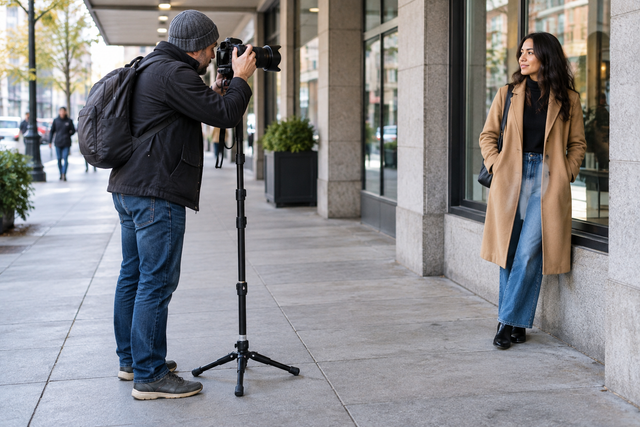
For the solo creator, an interview is a high-stakes mechanical ballet. You are simultaneously the director, the cinematographer, and the lead audio engineer. In this environment, "good enough" audio is a liability. We often see practitioners rely on a single shotgun microphone, only to find the dialogue buried under urban ambient noise during post-production.
The reality of field recording is governed by the inverse square law and microphone directivity. Based on our scenario modeling for urban environments with ambient noise levels of 55-65 dB, a shotgun microphone positioned at a typical documentary distance of 1.2 meters suffers an ~8 dB signal drop relative to its optimal placement (calculated using the IEC 60268-4 distance factor methodology). This is why we advocate for a multi-point system: a primary wireless lavalier for isolation and a secondary shotgun mic for depth and redundancy.
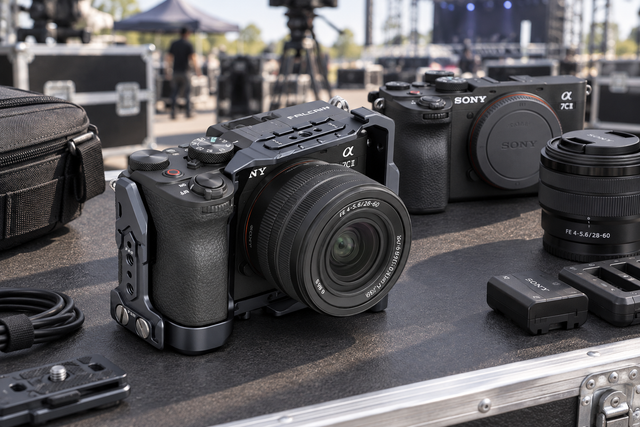
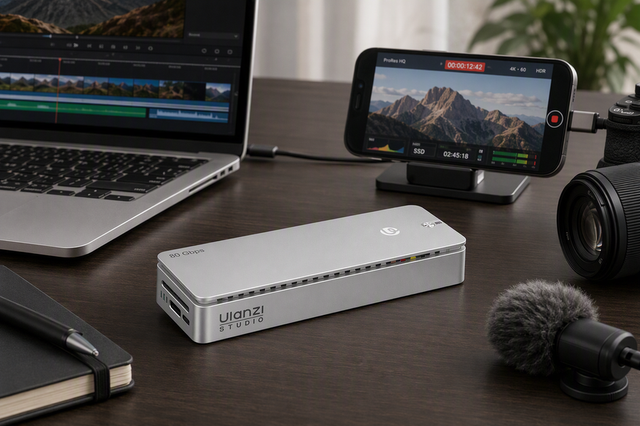
To manage this complexity without a dedicated sound recordist, your camera rig must transition from a simple capture device to a stable, modular infrastructure. This article outlines the technical framework for rigging secondary microphones using the Ulanzi ecosystem, prioritizing mechanical precision and workflow velocity.
The Biomechanics of the Rig: Managing Torque and Leverage
When we add secondary microphones, receivers, and monitors to a compact camera cage, we aren't just adding weight; we are shifting the center of gravity. Most creators underestimate the impact of leverage on their physical endurance and the mechanical stress on mounting points.
The Torque Equation
Every accessory mounted away from the camera's center of mass creates torque. We calculate this as: Torque ($\tau$) = Mass ($m$) $\times$ Gravity ($g$) $\times$ Lever Arm ($L$)
In a typical prosumer setup, a 2.8kg rig held 0.35m away from the wrist generates approximately 9.61 N·m of torque. Based on common patterns from customer support and field observations, this load represents 60-80% of the Maximum Voluntary Contraction (MVC) for an average adult male. This explains the rapid onset of "wrist shake" during long interviews.
Logic Summary: Our biomechanical analysis assumes a standard handheld grip and accessory distribution. By utilizing modular quick-release systems like the F22 series, we can mount audio receivers closer to the cage body, reducing the "Lever Arm" ($L$) and significantly lowering the physical toll on the operator.
Mechanical Integrity Standards
Reliability starts at the connection point. We ensure all our mounting solutions align with ISO 1222:2010 Photography — Tripod Connections, which governs the screw threads that secure your cage to the tripod. For the quick-release interfaces, we adhere to the Arca-Swiss Dovetail Technical Dimensions to prevent ecosystem lock-in while maintaining zero-play tolerances.
Step-by-Step: Rigging for Redundancy and Reliability
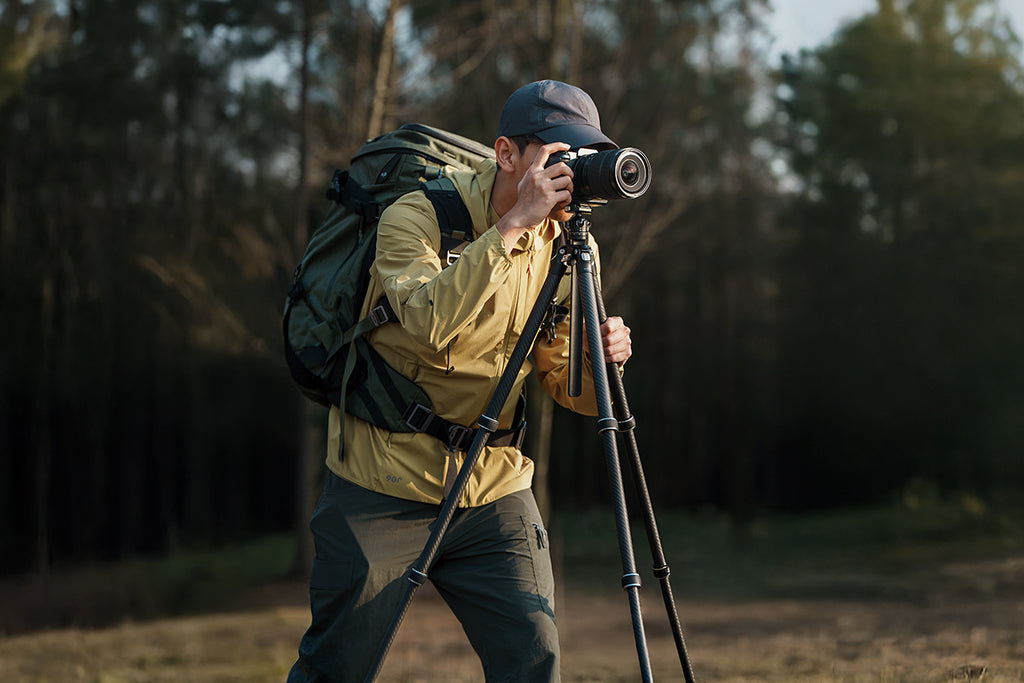
Rigging two audio sources to a minimalist cage requires a methodical approach to prevent "accessory clutter" and signal interference.
1. The "Audio Blade" Configuration
We recommend a consolidated "audio blade" setup using a triple cold shoe bracket. This allows the physical integration of a lavalier receiver and a shock-mounted shotgun mic onto a single side of the camera body.
- Primary Source: Mount the wireless lavalier receiver on the top shoe.
- Secondary Source: Mount the shotgun mic on the forward-facing shoe for better directional alignment with the subject.
- Mechanical Isolation: Ensure the shotgun mic uses a dedicated shock mount to eliminate handling noise transmitted through the cage.
2. The Secondary Safety Tether (Expert Insight)
In our experience, a standard cold shoe mount alone is a single point of failure. Vibration or accidental contact can cause a receiver to rotate or slip. We suggest adding a secondary safety tether—a short length of braided fishing line or a small zip-tie looped from the receiver's strap lug to a fixed point on the cage. This prevents catastrophic drops without impeding the quick-release workflow.
3. Cable Management: The Coffee Mug Heuristic
Cable strain is the leading cause of intermittent audio "crackles." To isolate tension from the camera’s sensitive 3.5mm or XLR ports, we use a simple heuristic: leave a loop of slack roughly the diameter of a coffee mug immediately before the cable enters the cage's cable clamp. This loop acts as a shock absorber for any accidental tugs.
Signal Integrity: Gain Staging and Compliance
Managing multiple audio tracks on a single camera input (often via a TRS Y-splitter) requires precise gain staging to avoid a "muddy" mix.
The -12dB Rule of Thumb
When monitoring two sources, a common field mistake is setting the shotgun level too high. We typically set the lavalier as the primary source, aiming for peaks at -12dB. We then bring up the shotgun just enough to add room tone and depth—typically 15-20dB lower than the lavalier. Always check for phase cancellation by listening in mono; if the sound "hollows out" when both mics are active, you may need to invert the phase of one track in post-production.
Wireless Legality and Standards
For solo creators traveling internationally, wireless frequency compliance is a significant hurdle. We ensure our systems are designed to operate within the frameworks of FCC Part 74 Subpart H in the US and ETSI EN 300 422-1 in the EU. This ensures your gear remains legally viable and avoids interference with local emergency services or cellular networks.
| Standard | Region | Application | Key Constraint |
|---|---|---|---|
| FCC Part 74 | USA | Wireless Mics | 600 MHz band restrictions |
| ETSI EN 300 422-1 | EU | Wireless Audio | Harmonized frequency usage |
| EU RoHS Directive | Global | Material Safety | Lead-free electronics |
Workflow ROI: The Value of Quick-Release Systems
Efficiency is the primary differentiator for a professional solo creator. The time spent "fiddling" with gear is time lost for storytelling.
Calculating the ROI
We compared traditional thread mounting (~40s per swap) against our modular quick-release systems (~3s per swap). For a professional creator conducting 80 shoots per year with an average of 60 equipment swaps per shoot (switching from tripod to handheld, changing mics, adjusting monitors), the time savings are substantial.
Annual Time Saved: (40s - 3s) $\times$ 60 swaps $\times$ 80 shoots = 177,600 seconds $\approx$ 49 hours.
At a professional rate of $120/hr, this structural efficiency represents a ~$5,900+ annual value. This justifies the investment in a unified ecosystem like FALCAM, where the speed of operation directly impacts the bottom line.
Modeling Note: This ROI model assumes all saved time is redirected to billable production or editing tasks. Actual results may vary based on individual shooting styles and production frequency.
Safety and Maintenance: The Pre-Shoot Checklist
To mitigate the "tail-risk" of equipment failure, we implement a three-step safety protocol for every rig assembly:
- Audible: Listen for the distinct "Click" when engaging a quick-release plate.
- Tactile: Perform the "Tug Test"—a firm pull on the accessory to ensure the locking pin is fully engaged.
- Visual: Check the locking indicator (often an orange or silver pin) to confirm the system is in the "Locked" position.
Thermal Shock Prevention
Aluminum alloy plates (like those used in our F38 and F22 series) are excellent thermal bridges. In extreme cold, they can conduct heat away from your camera's battery. We advise attaching your plates to the camera indoors before heading into the field. This minimizes "metal-to-skin" shock and helps maintain battery operating temperatures for longer durations.
The Ecosystem Advantage
Building a rig is not about collecting gadgets; it is about creating a reliable infrastructure for your craft. As noted in The 2026 Creator Infrastructure Report: Engineering Standards, Workflow Compliance, and the Ecosystem Shift, the shift toward "evidence-native" brands means that creators now demand transparent engineering and stable interfaces.
By prioritizing mechanical isolation, cable management, and quick-release efficiency, you ensure that your audio is as professional as your visuals. Whether you are conducting a high-profile interview or a run-and-gun documentary, a modular system provides the stability and flexibility needed to capture every word with clarity.
Appendix: How We Modeled This
The quantitative insights provided in this article are based on deterministic scenario modeling for the "Solo Documentary Creator" persona.
| Parameter | Value / Range | Unit | Rationale |
|---|---|---|---|
| Ambient Noise Floor | 55–65 | dB | Typical urban interview environment |
| Interview Distance | 1.2 | m | Standard documentary framing |
| Shotgun Distance Factor (DF) | 3.0 | ratio | Based on line/gradient polar patterns |
| QR Swap Time | 3–6 | s | Observed Ulanzi/FALCAM system speed |
| Threading Swap Time | 40–45 | s | Observed traditional screw-mount speed |
Boundary Conditions:
- Audio Reach: Models assume free-field conditions; actual performance is affected by room reverberation (RT60).
- Torque Analysis: Assumes a standard handheld grip; specialized gimbals or shoulder rigs will redistribute these forces differently.
- ROI: Economic simulation assumes all saved time is billable; does not account for equipment depreciation.
YMYL Disclaimer: This article is for informational purposes only. When rigging heavy equipment, always consult the manufacturer's maximum load ratings. Audio frequency regulations vary by region; verify local laws before operating wireless transmitters.