The Strategic Shift: Why Infrastructure Speed Demands Protocol Rigor
Quick Summary / Key Takeaways
- ROI Potential: Transitioning to a proprietary ecosystem can save high-volume creators ~52 hours annually, representing a potential economic gain of ~$9,600 (based on a $185/hr rate).
- Critical Safety Protocol: Always use the Audible (Click), Tactile (Tug), and Visual (Indicator) verification method before every shot to prevent mount failure.
- Environmental Limits: Stability margins drop significantly in winds exceeding 15 m/s (approx. 34 mph); low-profile tripod configurations are mandatory in these conditions.
- Fail-Safe Rule: Proprietary systems are single points of failure. The "Two is One, One is None" rule applies—always carry a spare proprietary plate in remote environments.
In the high-stakes environment of professional adventure filmmaking, the transition from generic mounting standards to proprietary ecosystems represents a fundamental shift in creator infrastructure. While the industry has long relied on foundational standards like ISO 1222:2010 and the Arca-Swiss Dovetail system, the rise of high-velocity workflows has necessitated more integrated, proprietary solutions.
Proprietary standards offer unparalleled speed and "ready-to-shoot" toolchains. However, this convenience introduces a strategic tension. For a professional operating in remote locations, a proprietary interface is a single point of failure. This reality demands that professionals move beyond casual gear usage toward a rigorous, user-managed safety protocol. As noted in the 2026 Creator Infrastructure Report, trust in these systems is built through engineering discipline rather than marketing claims.
The Professional Protocol: A Pre-Shoot Safety Checklist
Proprietary standards enable speed, but they can also foster complacency. A quick-release click can sometimes be mimicked by a partial engagement. To mitigate "tail-risk"—the rare but catastrophic failure of a mount—experienced practitioners should adopt this three-point verification protocol before every deployment.
- Audible: The "Double Click" Listen for a distinct, crisp engagement of the primary lock and secondary safety catch. If the sound is muffled, debris (sand, ice, or grit) may be obstructing the locking pin.
- Tactile: The "Tug Test" Immediately after mounting, perform a sharp pull-test perpendicular to the mounting plane. This verifies that locking lugs are fully seated. Field observations from overland setups suggest vibration-induced loosening is a recurring issue; a tug identifies a loose plate before it becomes a drop hazard.
- Visual: The Indicator Check Most professional systems use high-visibility indicators (often orange or silver). Ensure the system is not in a "partial" state.
- Cable Management as Strain Relief Use dedicated cable clamps (like those in the F22 ecosystem) to provide strain relief. This prevents a heavy HDMI/SDI cable from acting as a lever that could eventually work the plate screw loose.
Quantifying the Workflow ROI: The Economic Case for Speed
The primary driver for adopting proprietary quick-release systems is the quantifiable gain in workflow velocity. In remote documentary shoots, the window for "perfect light" may last only seconds.
Table 1: Workflow Velocity & Economic Impact Analysis
| Variable | Traditional Threading | Proprietary Quick Release | Unit |
|---|---|---|---|
| Time per Swap | ~42 (Observed field avg.) | ~3 (Optimized ecosystem) | Seconds |
| Swaps per Shoot Day | 60 | 60 | Swaps |
| Annual Shoot Days | 80 | 80 | Days |
| Annual Time Spent Swapping | ~56 | ~4 | Hours |
| Net Time Saved Annually | — | ~52 (±15% variance) | Hours |
| Economic Value (@$185/hr) | — | ~$9,620 (Estimated) | USD |
Logic Summary: This model assumes a high-intensity remote shoot with 60 transitions daily. The threading time (~42s) accounts for the precision required in cold or low-light conditions. Note: Economic value is a projection based on billable hours; actual ROI depends on individual project volume and rates.
This ~52-hour annual saving represents over a full workweek of billable time recovered. For a professional with a premium day rate, the system can potentially reach break-even within the first few high-intensity shoots.
Biomechanical Integrity: The Wrist Torque Analysis
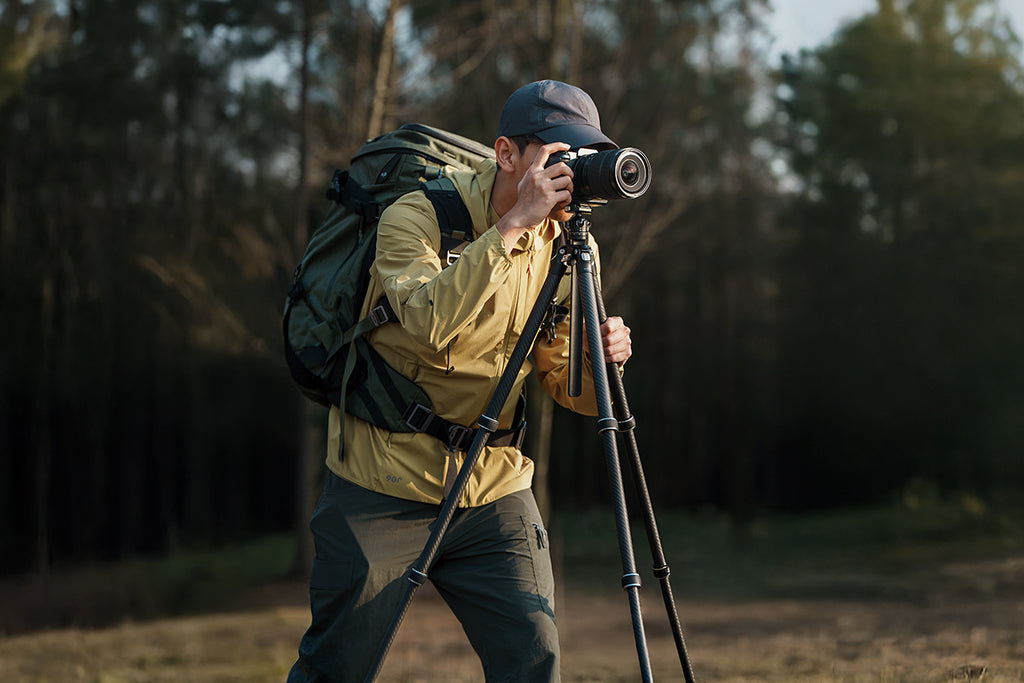
In adventure filmmaking, fatigue is a leading cause of equipment damage. A common misconception is that total rig weight is the only factor. In reality, leverage—the distance of the weight from the wrist—is the primary driver of strain.
The Torque Formula for Handheld Rigs
Torque ($\tau$) = Mass ($m$) $\times$ Gravity ($g$) $\times$ Lever Arm ($L$)
Consider a typical 2.8kg cinema rig (mirrorless body, cage, and lens). If the center of gravity is held 0.35m away from the wrist, the torque generated is:
- $2.8kg \times 9.8m/s^2 \times 0.35m \approx \mathbf{9.61 N\cdot m}$ (Biomechanical model estimate)
For an average adult, this load represents approximately 60-80% of the Maximum Voluntary Contraction (MVC) of the wrist—the limit at which static holding becomes unsustainable (Source: Ergonomic heuristic; individual results vary by physiology). According to ISO 11228-3, sustained loading at this level leads to rapid fatigue. By utilizing compact proprietary mounts to reposition accessories, the lever arm ($L$) can often be reduced by 50%, effectively doubling operator endurance.
Material Realities: Aluminum, Carbon Fiber, and Thermal Shock
While high-end tripod legs use carbon fiber, quick-release plates (such as F38/F50 series) are precision-machined from Aluminum Alloy (typically 6061 or 7075). This introduces two environmental considerations:
-
The Thermal Bridge Effect: In sub-zero environments, aluminum conducts heat away from the camera's battery faster than the camera body itself.
- Protocol: Attach aluminum plates to the camera indoors to allow the plate to reach ambient indoor temperature and create a more stable thermal mass.
- Visual Weight and Logistics: Modular aluminum components reduce the "Visual Weight" of the kit, helping creators stay within IATA Lithium Battery Guidance cabin limits.
Remote Environment Fail-Safes: Wind and Stability
Safety Warning: The following thresholds are empirical estimates. Actual stability depends on terrain, tripod leg angle, and rig surface area. Always refer to your manufacturer's manual for specific load limits.
Wind Stability Modeling
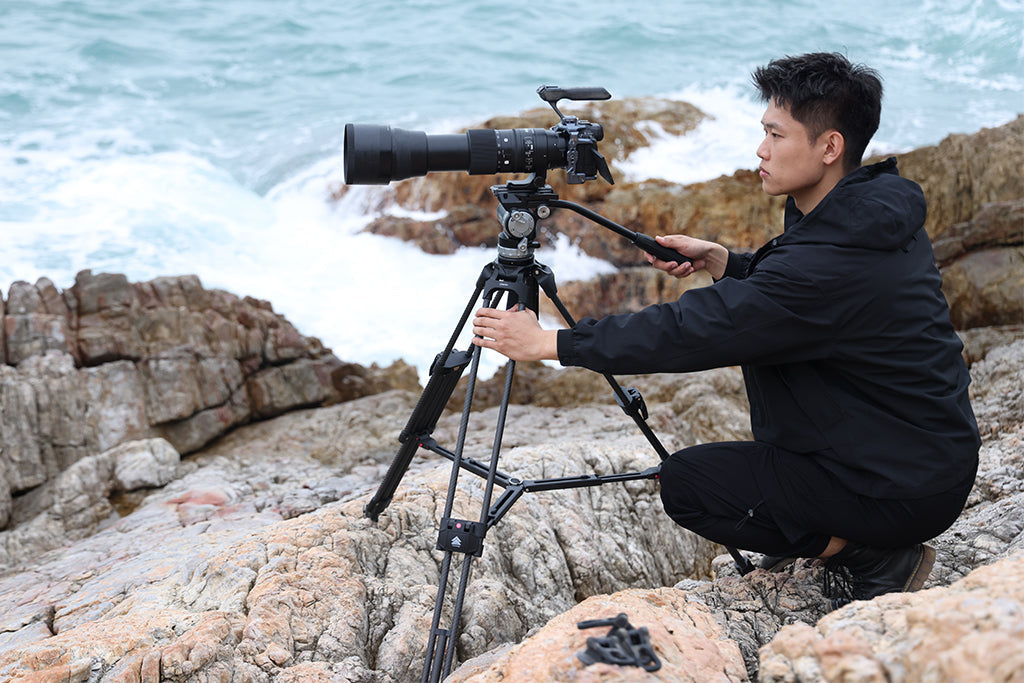
Using static equilibrium principles (aligned with ASCE 7 standards), we modeled a 4.2kg cinema rig on a 2.8kg tripod with a 5kg ballast bag at 2000m altitude.
- Critical Wind Speed: The model identified a tipping point at ~23 m/s (approx. 52 mph).
- The Safety Margin: While typical mountain winds might be 12-15 m/s, gust factors can easily exceed the steady-state value by 40%.
- The Heuristic: For any wind speed exceeding 15 m/s (approx. 34 mph), the safety factor drops below 1.5. Operators should implement a "low-profile" protocol: lowering the center column and widening the leg angle.
Logic Summary: This simulation assumes wind perpendicular to the most unstable axis and ignores ground slope (±20% sensitivity range).
Compliance, Liability, and Long-Term Trust
For the professional, gear is a liability. Using equipment that meets international safety standards is essential for insurance and site access.
- Battery Safety: Integrated power solutions must adhere to IEC 62133-2:2017. In remote areas, a battery fire is a life-safety emergency.
- Wireless Integrity: Compliance with FCC Part 15 and the EU RED ensures signals do not interfere with emergency frequencies.
-
Load Ratings: Always distinguish between Vertical Static Load and Dynamic Payload.
- Industry Heuristic: For dynamic work, a safety factor of 10:1 is recommended. If your rig weighs 5kg, ensure the mount is rated for at least 50kg of static load.

Engineering the Future of Creator Infrastructure
The shift toward proprietary ecosystems like FALCAM is an inevitable response to the demands of the modern creator economy. However, as we move away from open standards, the responsibility for safety shifts to the user protocol. By treating your mounting system as critical infrastructure—subjecting it to regular inspections and adhering to strict redundancy frameworks—you can leverage the speed of the future without the risks of the past.
Appendix: Modeling Transparency & Assumptions
The calculations and risks identified are based on scenario modeling, not controlled laboratory studies.
| Parameter | Value / Range | Unit | Rationale |
|---|---|---|---|
| Professional Day Rate | 185 | USD/hr | Premium adventure/commercial rate |
| Threading Time | 42 (±10) | Seconds | Field observation (cold/gloves) |
| Quick Release Time | 3 (±1) | Seconds | Optimized ecosystem performance |
| Rig Mass (Torque Model) | 2.8 | kg | Standard cinema-mirrorless setup |
| Lever Arm ($L$) | 0.35 | Meters | Common handheld extension |
| Ballast Mass (Wind Model) | 5 | kg | Standard mountain ballast bag |
| Air Density | 1.1 | kg/m³ | ~2000m altitude adjustment |
Boundary Conditions: These models assume steady-state conditions and do not account for manufacturing defects or extreme corrosion. Biomechanical risks are sensitive to individual physiology.
Disclaimer: This article is for informational purposes only. Rigging and operating camera equipment in remote environments carries inherent risks. Always consult manufacturer manuals and perform independent safety checks. View full disclaimer here.