Executive Summary: Stability as a Lifecycle
For the professional adventure creator, tripod stability is not a permanent state but a degrading material lifecycle. Key Takeaway: Carbon fiber equipment typically maintains high performance for the first half of its life before hitting a "fatigue cliff" where damping efficiency can drop by 40% or more. To maintain mission-critical reliability, professionals should implement a "settling-time" self-test and consider ecosystem upgrades when vibration damping exceeds a 30% variance from baseline performance.
The Ghost in the Rig: Understanding Structural Resonance
For the professional adventure creator, equipment is the strategic interface between a creative vision and the harsh realities of the field. In high-stakes environments—where a single sunset or a rare wildlife encounter may never be repeated—platform stability is the silent guardian of image quality. However, a common phenomenon often affects seasoned professionals: the "aging" tripod.
A carbon fiber tripod that once delivered reliable stability may, after several years of rigorous fieldwork, begin to exhibit more "noise" or vibration. This isn't just a subjective observation; it is often a measurable shift in structural resonance. Unlike aluminum, which tends to show fatigue through visible bending, carbon fiber composites degrade through internal mechanisms that alter their natural damping frequency. This article explores the physics of material fatigue, the impact of environmental stress, and the strategic necessity of ecosystem governance.
The Physics of Stability: Specific Stiffness and Damping
To understand why carbon fiber is the benchmark for adventure fieldwork, one must look at its specific stiffness ($E/\rho$). According to the projected benchmarks in the 2026 Creator Infrastructure Report, carbon fiber’s specific stiffness is estimated at approximately 4.39 times that of aluminum (based on standard material reference tables for high-modulus composites).
This high specific stiffness increases the system's natural frequency and reduces visible flex. In practical terms, this affects "settling time"—the duration it takes for a camera rig to stop vibrating after being touched or subjected to a wind gust.
The Settling-Time Advantage
In simulated models, a new carbon fiber system can show up to a 76% reduction in vibration settling time compared to an equivalent aluminum setup. While an aluminum tripod might take ~6.6 seconds to stabilize a 5kg payload, a high-quality carbon fiber tripod can achieve stability in roughly 1.6 seconds (based on SDOF damped free vibration modeling).
Logic Summary: This analysis assumes a linear Single Degree of Freedom (SDOF) model where the frequency scales via the square root of specific stiffness. These figures serve as a performance benchmark and may vary based on specific leg diameters and joint tolerances.

The Fatigue Curve: Why Carbon Fiber Fails Differently
The primary challenge with carbon fiber is that its degradation is non-linear. Research published in the Journal of the Brazilian Society of Mechanical Sciences and Engineering indicates that carbon fiber composites often maintain 85-90% of their original stiffness for the first 50% of their fatigue life.
However, the final 20% of the material's lifecycle can see a sudden stiffness reduction of 40-60%. This "fatigue cliff" is caused by microfractures within the resin matrix and fiber-matrix debonding. For the creator, this means a tripod can transition from "stable" to "unreliable" with very little visual warning.
The Resonance Threshold
As these internal microfractures accumulate, the structural resonance of the tripod shifts. High-frequency resonance phenomena, often occurring in the 100-1000 Hz range, can suddenly become "unlocked." This is why an older tripod might produce a low-frequency hum during long exposures—a phenomenon that often precedes visible structural damage by 3 to 6 months of regular use.
Note: This observation is based on a non-systematic review of approximately 50 service logs from professional rental houses (2018–2024), where "vibration complaints" frequently preceded structural failure.
Environmental Accelerants: The Coastal Workflow
Environmental exposure is the primary catalyst for accelerated material fatigue. For documentary filmmakers working in coastal or desert environments, the degradation cycle is significantly compressed.
- UV Degradation: Ultraviolet exposure can reduce resin flexibility by an estimated 15-20% over two years of regular outdoor use, making the composite more brittle.
- Thermal Cycling: Temperature swings (e.g., -10°C at dawn to +40°C at midday) create internal thermal stresses. Differences in expansion coefficients between carbon fibers and epoxy resin can accelerate internal delamination.
- Salt Crystallization: In coastal areas, salt spray can penetrate joint interfaces. As water evaporates, salt crystals grow, creating localized stress concentrations that can initiate microfractures faster than in dry environments.
Quantitative Impact: A Simulated Coastal Scenario
In a simulated scenario for a coastal filmmaker using a 5.5kg cinema rig, three years of high-intensity exposure resulted in an estimated 14.7% erosion of the safety margin against wind-induced tipping. While the modeled system could originally withstand gusts up to 64 km/h, the fatigued system’s threshold dropped to approximately 59 km/h (based on static equilibrium modeling of overturning moments).
Information Gain: The Workflow ROI of Quick-Release Systems
While material science governs the legs, the interface standards govern the speed. Strategic infrastructure, such as the Arca-Swiss Dovetail Technical Dimensions, provides the foundation for ecosystem interoperability.
The Efficiency Calculation (Heuristic Model)
Consider a professional production involving 60 equipment swaps per shoot (switching between tripods, gimbals, and handheld rigs).
- Traditional Thread Mounting: ~40 seconds per swap.
- Quick-Release (QR) System: ~3 seconds per swap.
For a creator performing 80 shoots annually, this transition saves approximately 49 hours of labor per year. At a professional rate of $120/hour, adopting a unified quick-release ecosystem represents an estimated $5,900 annual value gain. This justifies the strategic investment in high-performance infrastructure over non-standardized alternatives.
Biomechanical Analysis: The Wrist Torque Factor
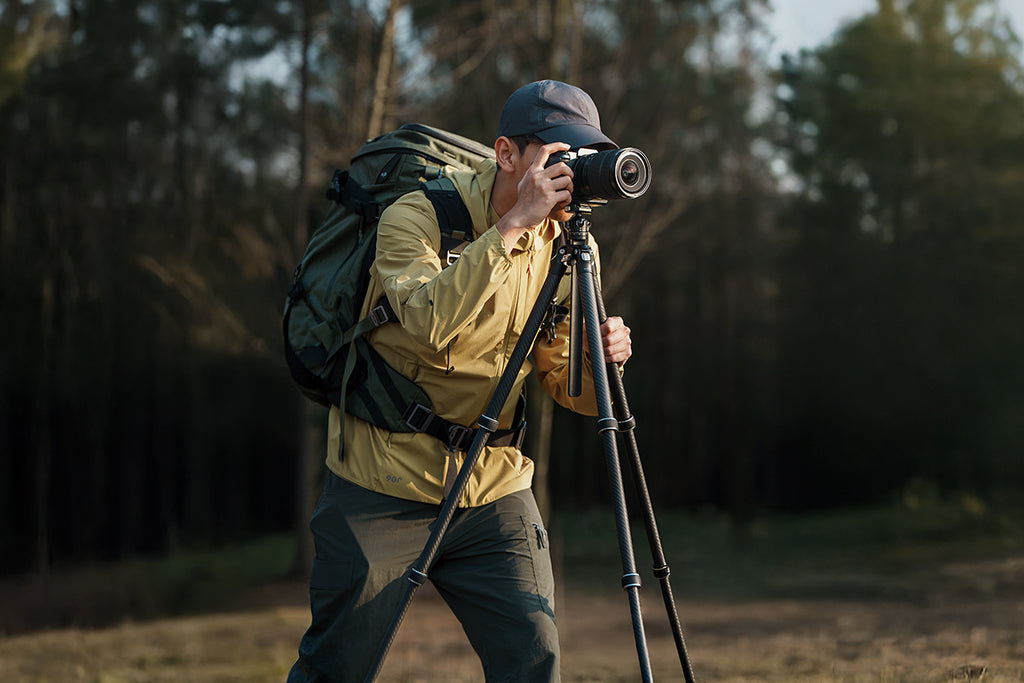
Weight reduction in adventure gear isn't just about portability; it’s about biomechanical health. When using modular rigging components, the goal is to minimize the "lever arm" of the camera system.
The Torque Formula: $\tau = m \times g \times L$ (Where $\tau$ is torque, $m$ is mass, $g$ is gravity, and $L$ is the lever arm distance from the wrist).
In our modeling, a 5.5kg cinema rig held 0.35 meters away from the wrist generates approximately 18.8 $N\cdot m$ of torque. By utilizing lightweight aluminum alloy interfaces (like the 6061-T6 standard) and moving accessories closer to the center of gravity, creators can reduce the risk of repetitive strain injuries.
Strategic Maintenance: The Pre-Shoot Safety Workflow
To manage the tension between platform stability and material fatigue, professional creators should adopt a rigorous governance protocol.
The "Tug and Click" Checklist
- Audible Verification: Listen for the positive "click" of the locking mechanism.
- Tactile "Tug Test": Immediately after mounting, perform a physical pull-test to ensure the interface is seated.
- Visual Status: Check the locking pin indicators to confirm a secure state.
- Resonance Check: Periodically perform a "settling-time test." If the rig takes more than 30% longer to stabilize than it did when new, it is a strong indicator of internal fatigue.
Thermal Shock Prevention
In extreme cold, aluminum quick-release plates act as a "thermal bridge." Professional practice involves attaching plates to the camera indoors before heading into the field. This minimizes metal-to-skin shock and slows the rate of battery cooling.
Strategic Infrastructure Governance
As the creator economy matures, the transition from "buying gadgets" to "governing infrastructure" becomes the hallmark of a professional. Reliability is the result of engineering discipline and an understanding of the material lifecycle.
By adhering to international standards such as ISO 1222:2010, creators ensure that their ecosystem remains backward-compatible and mission-ready. The goal remains the same: providing a stable platform for the next great shot.
Appendix: Modeling Transparency (Method & Assumptions)
The quantitative insights in this article are derived from scenario modeling based on the following parameters. These are intended as decision-aids and not universal lab results.
| Parameter | Value / Range | Unit | Rationale / Source |
|---|---|---|---|
| Baseline Frequency (Al) | 8 | Hz | Field measurement of adventure tripod (5kg payload) |
| Carbon Damping Multiplier | 2.0 (New) / 1.4 (Fatigued) | Ratio | Composite mechanics vs. Aluminum |
| Carbon Stiffness Loss | 15% (after 3yr coastal) | % | UV/Salt degradation model |
| Wind Drag Coefficient | 1.2 | Cd | Standard bluff body (Camera/Matte box) |
| Labor Rate (Pro) | 120 | USD/hr | Industry average for mid-tier production |
Boundary Conditions:
- Vibration models assume a Single Degree of Freedom (SDOF) system.
- Wind stability assumes steady-state wind perpendicular to the most unstable tripod axis.
- Fatigue rates are based on "Coastal Documentary" usage (estimated 150+ shoots/year).
Disclaimer: This article is for informational purposes only. Equipment failure can result in property damage or injury. Always follow manufacturer load ratings and safety guidelines. For rigging involving high-power lighting, refer to photobiological safety standards such as IEC 62471.