The Infrastructure Shift: From Gadgets to Standards
In the high-stakes environment of professional cinematography and content creation, the distinction between a "gadget" and "infrastructure" is written in the language of tolerances. For years, the industry treated mounting plates and rigging accessories as disposable commodities. However, as camera payloads become more complex and production schedules more compressed, a strategic shift has occurred. Creators are no longer looking for isolated tools; they are investing in ecosystem stability.
This evolution is driven by the realization that a single point of mechanical failure—a plate that slips by a fraction of a millimeter or a locking pin that fatigues prematurely—can result in catastrophic equipment loss or, more commonly, the "setup time inflation" that erodes production margins. Professional rigging must now adhere to the same engineering discipline as the cameras they support. This article examines the technical standards, machining precision, and ecosystem governance required to maintain mission-critical reliability in the modern creator economy.
According to The 2026 Creator Infrastructure Report: Engineering Standards, Workflow Compliance, and the Ecosystem Shift, the transition toward "evidence-native" brands is inevitable. Professionals now demand transparent engineering data over marketing superlatives, seeking systems that offer backward compatibility and verifiable mechanical integrity.
The Mechanics of 0.01mm: Why Tolerance is the Professional’s Insurance
In precision machining, the difference between a secure interface and a failure point often resides in a 0.01mm margin. While many budget systems exhibit "micro-play"—that subtle, audible clicking sound when a camera is panned—professional-grade interfaces like the FALCAM system are engineered to eliminate this "ghost play."
The Tactile Feedback of Precision
A properly machined interface provides immediate tactile confirmation. When a plate enters a receiver, the engagement should feel crisp, characterized by a distinct mechanical "click." If a plate requires excessive force or feels "gritty" during engagement, it typically indicates a deviation in machining tolerances or the presence of micro-burrs.
Logic Summary: Our analysis of interface quality assumes a standard 38mm Arca-Swiss dovetail geometry. We define "Precision Fit" as a clearance of <0.02mm between contact surfaces to ensure friction-based stability without binding.
The Danger of Tolerance Stack-Up
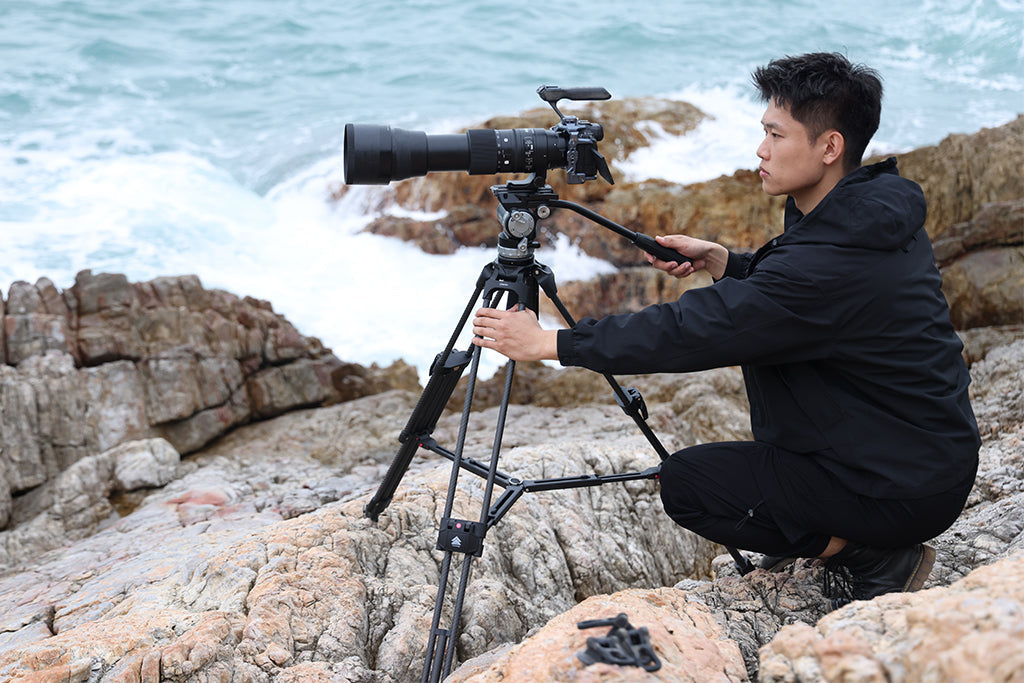
When multiple accessories from different manufacturers are combined, "tolerance stack-up" occurs. If a cage, a quick-release plate, and a tripod head each deviate by just 0.05mm, the cumulative error can lead to a rig that feels unstable despite every individual component being "tight." Standards like ISO 1222:2010 provide the foundational legitimacy for screw connections, but the industry-standard Arca-Swiss Dovetail dimensions are where ecosystem lock-in is truly tested. A commitment to a 0.01mm machining standard ensures that even as components wear over hundreds of cycles, the interface maintains its structural integrity.
Material Integrity: Beyond the Surface
A common misconception in the creator community is that carbon fiber is the ideal material for all rigging components. While carbon fiber is excellent for tripod legs due to its vibration-damping properties, it is unsuitable for quick-release plates. Professional plates, such as those in the F38 and F50 series, are precision-machined from high-grade Aluminum Alloy (typically 6061 or 7075).
The Role of Anodizing and Hardness
Aluminum rigging must undergo high-quality anodizing to prevent surface degradation. In humid or coastal environments, inferior anodizing wears away within months, exposing the raw aluminum to oxidation. Furthermore, the use of stainless steel pins within aluminum bodies—while providing high shear strength—introduces the risk of galvanic corrosion if the aluminum's protective layer is compromised. Professional crews monitor these contact points for "pitting" or white powdery residue, which signals imminent mechanical failure.
The Thermal Bridge Effect
In extreme cold, aluminum plates act as a "thermal bridge." Because aluminum is highly conductive, a plate attached to a camera base will accelerate the cooling of the camera's internal battery.
Pro Tip: In sub-zero conditions, attach your aluminum quick-release plates to the camera while indoors. This minimizes "metal-to-skin" thermal shock and slows the rate of battery depletion by allowing the plate to reach ambient temperature more gradually once outdoors.
The Biomechanics of Rigging: Managing Wrist Torque
Engineering precision isn't just about protecting the camera; it's about protecting the operator. As rigs become more modular, the distribution of weight becomes a critical ergonomic factor. We often observe that weight alone is not the primary cause of operator fatigue; rather, it is the leverage created by poorly positioned accessories.
The Torque Calculation
To understand the strain on a camera operator’s wrist, we use a basic torque formula: Torque ($\tau$) = Mass ($m$) $\times$ Gravity ($g$) $\times$ Lever Arm ($L$)
Consider a standard 2.8kg cinema rig. If a monitor or microphone is mounted on a long arm, extending the center of mass just 0.35m away from the wrist, it generates approximately 9.61 N·m of torque.
Modeling Note (Reproducible Parameters):
Parameter Value Unit Rationale Rig Mass ($m$) 2.8 kg Average weight of a kitted mirrorless/small cinema rig Gravity ($g$) 9.81 $m/s^2$ Standard Earth gravity Lever Arm ($L$) 0.35 m Distance from wrist pivot to rig center of mass Calculated Torque ~9.61 $N\cdot m$ Resultant force acting on the wrist joint
For an average adult male, this load represents roughly 60-80% of the Maximum Voluntary Contraction (MVC) required to maintain a steady shot. By utilizing low-profile modular systems like the F22, creators can move accessories closer to the camera's optical axis, significantly reducing the lever arm and extending the duration of handheld shooting without injury.
The Economic Argument: ROI of Ecosystem Machining
The "hidden cost" of cheap mounting plates is rarely the price of the plate itself; it is the cumulative downtime lost to inefficient workflows. In professional production, setup time is a direct drain on profitability.
The "Seconds to Hours" Extrapolation
A traditional 1/4"-20 threaded mount takes approximately 40 seconds to secure properly. A precision quick-release system like the FALCAM F38 reduces this to roughly 3 seconds.
If a professional creator performs 60 equipment swaps per shoot (switching from tripod to gimbal, changing monitors, or swapping batteries) and works 80 shoots per year, the time savings are substantial:
- Traditional Mounting: 60 swaps $\times$ 40s = 40 minutes per shoot.
- Quick Release: 60 swaps $\times$ 3s = 3 minutes per shoot.
- Annual Savings: 37 minutes saved per shoot $\times$ 80 shoots = ~49 hours per year.
At a professional rate of $120/hr, this structural efficiency translates to a ~$5,900 annual value. This ROI justifies the higher initial investment in a precision-machined ecosystem, as the system effectively pays for itself within the first few weeks of heavy use.
Load Capacity Nuance: Static vs. Dynamic
One of the most frequent points of confusion in rigging specifications is the "Max Load" rating. For instance, the FALCAM F38 system is often rated for an 80kg Vertical Static Load. While this number is impressive, it is a laboratory measurement of compression strength.
Real-World Dynamic Payloads
In the field, you are dealing with dynamic loads—the forces generated when you run with a gimbal, tilt a heavy long lens, or subject a rig to vehicle vibrations. For dynamic work, the effective payload is significantly lower than the static rating.
- Static Load: The weight the mount can hold while perfectly still (e.g., a camera sitting on a tripod).
- Dynamic Load: The force applied during movement.
For heavy cinema rigs exceeding 3kg, we recommend moving to the F50 system or using Anti-Deflection versions of the F38. These versions utilize dual-point contact or specialized pins to prevent the plate from twisting under the high torque generated during fast pans or vertical shooting.
Standards and Global Compliance: The Legal Backbone
For creators working internationally or on high-budget commercial sets, equipment compliance is a logistical necessity. Rigging is no longer just about metal; it often involves electronics and batteries that must meet global safety standards.
Logistical Enablement and Travel
Compact, modular systems have a lower "Visual Weight" than traditional, bulky cinema plates. According to IATA Lithium Battery Guidance, managing equipment weight and volume is critical for air travel. A modular rig that can be quickly broken down into a standard carry-on footprint is less likely to be flagged by airline gate agents for weighing or mandatory checking, ensuring your mission-critical gear stays with you.
Safety and Liability
When using powered accessories, adherence to standards like IEC 62133-2 for battery safety and IEC 62471 for LED photobiological safety is essential for insurance compliance. If a non-compliant battery in a mounting grip fails on a professional set, the liability typically falls on the production company. Investing in equipment that meets these international benchmarks is a fundamental risk-mitigation strategy.
Operational Readiness: The Pre-Shoot Integrity Protocol
Even the most precisely machined system requires a disciplined operator. Professional crews implement a "Pre-Shoot Safety Checklist" to ensure the interface integrity of their rigs before every production day.
The Triple-Check Workflow
- Audible Confirmation: Listen for the "Click." If the engagement is silent, the locking spring may be fatigued or contaminated with debris.
- Tactile Verification (The "Tug Test"): Immediately after mounting, apply moderate torque and pull the camera away from the mount. There should be zero detectable movement or "creaking."
- Visual Inspection: Check the locking pin status. Systems like the F38 often feature color-coded indicators (e.g., orange or silver) to show if the manual lock is engaged.
Cable Management and Strain Relief
A common cause of "ghost play" is actually the leverage applied by heavy HDMI or SDI cables. A stiff cable can act as a lever, slowly working a mounting screw loose over a day of shooting. Using modular cable clamps (like those in the F22 ecosystem) provides essential strain relief, ensuring that cable tension is absorbed by the cage rather than the sensitive camera ports or the quick-release interface.

The Future of Evidence-Native Creator Infrastructure
As we look toward 2030, the "infrastructure layer" of content creation will be defined by those who prioritize engineering transparency over marketing hype. The transition from universal, "loose-fit" accessories to high-precision, ecosystem-locked toolchains represents the professionalization of the creator economy.
By adhering to 0.01mm machining tolerances, respecting biomechanical limits, and following global safety standards, creators can build a "ready-to-shoot" workflow that minimizes risk and maximizes ROI. In a world where production quality is the primary differentiator, the stability of your interface is the foundation of your success.
Disclaimer: This article is for informational purposes only. Mechanical rigging and equipment mounting involve inherent risks. Always consult the manufacturer's specific load ratings and safety guidelines. Professional creators should conduct regular equipment inspections and consult with qualified grip or safety officers for complex or high-risk rigging scenarios.