

Choosing among RGB pocket lights comes down to matching three documented facts, output and color specifications, a runtime tied to a specific power mode, and a mounting interface, to the way you actually shoot. A single bright spec sheet doesn't tell you whether a light will survive a two-hour shoot or clip onto your rig.
The Ulanzi C10 RGB Pocket Power 10W RGB Video Light is the one pocket light in our lineup with output, color, and runtime details spelled out on its product listing, so we use it below as a working example, not a declared winner. Treat every number here as a starting point to verify against your own setup, especially the mounting fit, before you buy.
Which RGB pocket light fits your video setup?
The setup you shoot in decides which spec matters most, and no single "versatile mount" claim covers moving, camera-mounted, and off-camera use at once. Start by identifying your scenario, then check the matching criteria below before you commit to any RGB pocket light.
- Moving or selfie-style vlogging: Prioritize a documented way to hold or attach the light to the phone or camera you're already using. An included clamp or adapter is only useful if its exact interface matches your device, so check that pairing directly rather than assuming a pocket light labeled "portable" will grip your rig.
- Camera-mounted recording: Require an explicitly documented match between the light's mount and your camera's cold shoe, cage rail, or accessory point. Interfaces that look similar, such as different cold shoe styles, are not automatically interchangeable.
- Off-camera fill or color accent: Require a documented stand or support connection. A pocket light bundled with a camera adapter and a phone clamp, like the C10's listed package, does not by itself confirm it will thread onto a light stand.
For deeper background on pairing a small light with a phone rig, our compact phone lighting kit guide walks through the role-based planning that applies across brands.
Compare output and color information
Compare a listed lux figure only against its stated measurement distance, and keep color-rendering data separate from RGB hue controls. Doing both prevents you from reading more into a spec sheet than it actually claims.
Illuminance, measured in lux, describes how much light lands on a surface, and that number drops sharply as distance from the source increases, so a figure quoted at 0.5 meters cannot be compared directly to one quoted at 1 meter (ERCO photometric lighting guide). The C10's listing states roughly 1120 lux at 0.5 meters and a 9000K color temperature, a manufacturer-reported figure tied specifically to that distance and setting rather than a general brightness claim.
Color accuracy for white light is a separate question from RGB effects. CRI is a color-rendering metric used to assess how a light source reproduces color, but the CIE's own position statement notes that CRI "does not characterize all aspects of the colour qualities of light sources" (CIE color quality position statement). The C10's listing separately states a CRI of 93 or higher across its 2500K to 9000K color temperature range, plus a 0 to 359 degree RGB hue adjustment, but the hue control is a distinct feature from white-light color accuracy and doesn't substitute for it. If skin tone rendering matters for your footage, our piece on red accuracy for skin tones explains why CRI alone can miss that detail.

Read runtime in its stated conditions
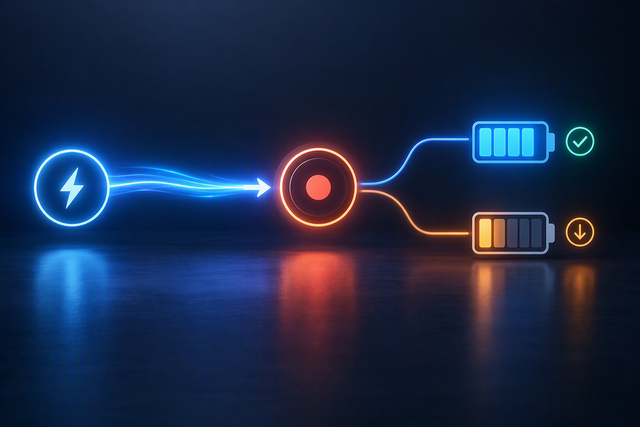
A runtime figure only tells you what to expect at the specific power level it was measured under, so pair every stated duration with its listed mode before planning a shoot around it. An "up to" number by itself is not enough.
The C10's listing gives two distinct approximate runtimes: roughly 55 minutes at maximum power and roughly 480 minutes at minimum power. These are two different endpoints on the same battery, not a single number you can average or apply to a mid-brightness or RGB-color setting. If your planned shoot runs at full brightness for an interview, use the maximum-power figure as your reference point; if you're leaving a light on low for ambient fill through a long session, the minimum-power figure applies instead. Neither figure is documented for settings in between, so treat any runtime outside the two stated conditions as unknown rather than estimating it from the endpoints.
Choose and verify a mounting route
Pick a mounting path only after you've identified the actual attachment point on your camera, phone rig, or stand, since the connection has to match on both sides. An included accessory is a starting point to check, not proof that it fits.
For camera-mounted use, confirm that the light's shoe or thread matches your camera's or cage's attachment point directly, or that an adapter's documented interface bridges the two. The C10's package listing includes a cold shoe adapter and a phone clamp base, but the listing does not specify exact device compatibility, so verify the thread size and any stated exclusions before assuming it works with your gear. A university library's cold shoe mount page is a useful example of what to check: it documents a quarter-inch thread along with specific device exclusions, showing the level of detail worth confirming for any adapter, though it doesn't establish fit for the C10 or any other particular light.
For handheld or phone use, match the clamp width and grip style to your actual phone or camera body rather than assuming "universal" holds true. For off-camera fill, confirm a stand connection is documented before you plan to place the light away from the camera; a cold shoe and phone clamp bundled for on-camera use don't guarantee a stand thread. Our guide to cold-shoe and quick-release mounts covers how these small-accessory ecosystems connect, and our mounting accessories collection is a place to compare adapters once you know the interface you need. Proceed with a purchase only once the attachment interface and your actual rig are both confirmed to match.
FAQs
Does a pocket light's maximum runtime apply when I use RGB color or higher brightness?
Not necessarily. A maximum-power runtime figure, like the C10's approximate 55-minute rating, is tied to that specific power setting, not to every brightness or RGB color mode. If a product listing doesn't state a runtime for RGB or intermediate brightness, treat that runtime as undocumented and plan around the closest stated condition instead of assuming the maximum-power number carries over.
Can I compare lux ratings measured at different distances?
No. Lux measures illuminance on a surface, which decreases with distance from the light source. A rating taken at 0.5 meters reflects a different intensity than one taken at 1 meter, so compare lux numbers only when measured at the identical distance and settings.
Does a high CRI rating guarantee accurate RGB lighting effects?
No. CRI evaluates white-light color fidelity against reference sources rather than saturated RGB colors or dynamic effects. RGB hue adjustments operate independently from white-light rendering metrics.